When Digital Service History Is Missing in the UK | Buyer Risk Guide
What It Means When Digital Service History Is Missing in the UK and How Buyers Should Interpret the Risk
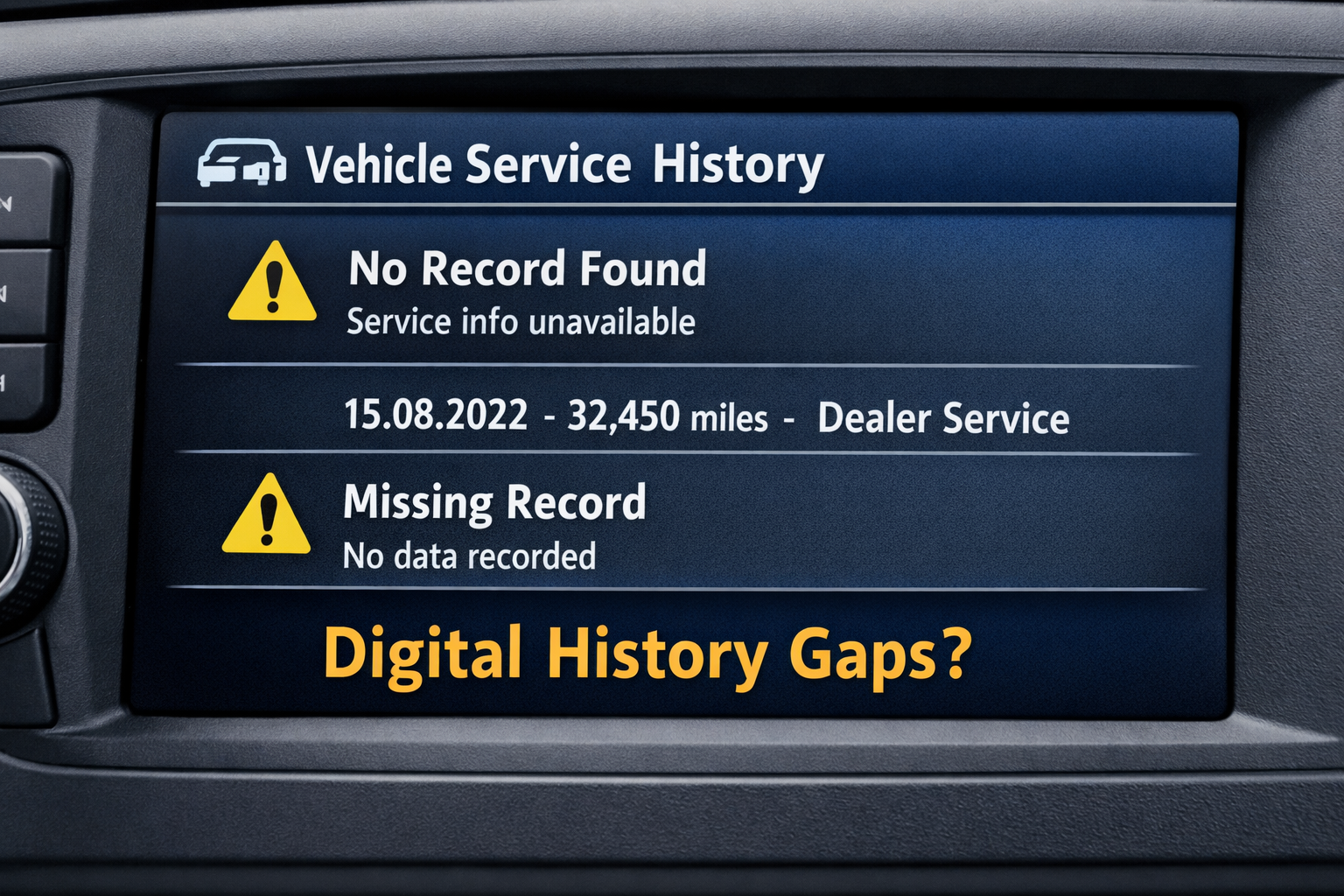
LONDON, UNITED KINGDOM – January 2026 – In the modern UK automotive market, digital service records have largely replaced traditional stamped booklets. However, an increasing number of buyers encounter situations where manufacturer-recorded digital entries appear incomplete or entirely absent. According to VinHistory, understanding what a missing digital service history actually means is critical before drawing conclusions about vehicle maintenance quality. As manufacturers transitioned to centralised Digital Service Record (DSR) systems over the past decade, servicing performed within authorised dealer networks began to be logged electronically against the vehicle’s 17-character VIN. In theory, this created greater transparency. In practice, gaps still occur — and interpreting those gaps requires nuance.
Why Digital Service Entries May Be Missing
There are several legitimate reasons why digital service history may not appear within manufacturer systems.
- The vehicle was serviced at independent garages outside authorised dealer networks.
- The car was imported and serviced in a different regional system.
- Early service years pre-date full digital adoption.
- Administrative entry delays or workshop recording errors occurred.
- Ownership changes resulted in incomplete data transfers.
The absence of digital entries does not automatically indicate neglect. However, it does remove one structured layer of manufacturer-verified documentation.
Dealer Networks vs Independent Servicing Visibility
Manufacturer digital systems are designed primarily for internal dealer infrastructure. When servicing is performed within franchised networks, records are typically timestamped and stored centrally. Independent garages, even when highly reputable, generally do not have direct access to manufacturer databases. Their work may be documented via invoices and service sheets, but it will not appear in official DSR systems unless later updated by authorised workshops. This distinction becomes particularly important when vehicles are advertised as having “full service history” but lack corresponding manufacturer-logged entries.
Evaluating Risk When Digital Records Are Absent
When digital service history appears incomplete, buyers should evaluate several additional factors:
- Consistency of MOT mileage progression
- Availability of independent service invoices
- Condition of wear components relative to mileage
- Ownership history stability
- Manufacturer warranty claim history (if available)
A vehicle with missing authorised digital entries but comprehensive independent documentation may present lower risk than a vehicle with no documentation at all. Structured interpretation is essential.
Imported Vehicles and Cross-Border Record Gaps
UK buyers frequently encounter imported vehicles, particularly from EU markets. Manufacturer digital systems may be regionally segmented. Servicing performed in continental Europe may not automatically appear within UK-accessible databases. This can create apparent gaps that are administrative rather than mechanical. Understanding how manufacturer systems handle cross-border data storage is key. For deeper insight into interpreting these scenarios, VinHistory provides guidance on when digital service history is missing in the UK.
Common Buyer Misinterpretations
Several recurring misconceptions appear in the UK used car market:
- Assuming missing digital entries equal mechanical neglect.
- Believing a stamped service book guarantees manufacturer-logged servicing.
- Overlooking independent servicing as valid maintenance evidence.
- Ignoring chronological mileage consistency.
Digital absence is a signal, not a verdict. Professional appraisal requires combining multiple documentation layers rather than relying solely on the presence or absence of manufacturer entries.
Impact on Valuation and Negotiation
Vehicles with continuous authorised dealer digital entries often command stronger resale positioning. Buyers perceive these vehicles as having clearer traceability and alignment with manufacturer standards. Where digital gaps exist, negotiation dynamics frequently shift. Sellers may need to provide supplementary documentation or adjust pricing expectations accordingly. For motor trade professionals, structured verification assists with risk assessment during part-exchange appraisal and auction acquisition.
How Structured Digital Verification Supports Clarity
VinHistory specialises in analysing manufacturer-recorded dealership entries where available. The process generally involves:
- Submission of UK registration or VIN
- Secure processing
- Delivery of structured digital report when data is accessible
Turnaround times typically range from 20 minutes to several hours depending on brand and system architecture. Importantly, the platform complements — rather than replaces — finance checks, theft databases and MOT history.
The Broader Market Context
As digital infrastructure expands across the automotive sector, transparency expectations continue to increase. Buyers are becoming more aware of the distinction between dealer-logged digital entries and independent servicing records. The absence of digital history should prompt investigation, not automatic rejection. Clear interpretation reduces both overreaction and underestimation of risk.
About VinHistory
VinHistory is a UK vehicle verification platform specialising in structured analysis of manufacturer-recorded digital service history data. By focusing on dealership-logged entries linked to VIN-based systems, the platform supports informed purchase decisions and improved transparency within the UK used vehicle market.


