The Vanishing Garage: How Proprietary Software Is Squeezing Out America's Independent Mechanic
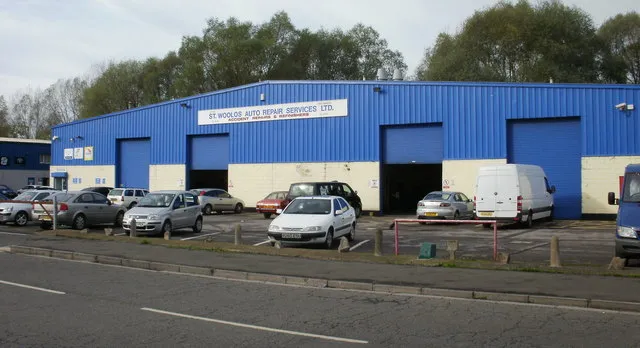
Photo: John Grayson, CC BY-SA 2.0, via Wikimedia Commons
There are roughly 280 million vehicles registered in the United States, and the overwhelming majority of them will never see the inside of a dealership service bay after their warranties expire. For generations, that mathematical fact sustained a vast network of independent repair shops — the neighborhood garages that kept American cars running at prices working families could afford.
That business model is now under quiet, structural threat. And unlike previous disruptions, this one may not be survivable through skill alone.
The New Locked Hood
The modern vehicle is a rolling data center — a typical car runs 100 million lines of code across dozens of networked control units. Increasingly, access to that code is restricted. Diagnostic data arrives encrypted. Repair procedures sit behind automaker portals with escalating subscription fees. Some functions — calibrating a camera after a windshield replacement, programming a battery module, even replacing a seat — require factory credentials that independents must lease at rates a small shop cannot sustain across a dozen manufacturers.
The result is a two-tier repair economy. Dealership service departments, backed by factory funding, enjoy full access. Independents pay for partial access, piece by piece, or turn away work they are entirely capable of performing.
The Security Argument — and Its Limits
Automakers are not wrong to raise concerns. Modern vehicles are attack surfaces; researchers have demonstrated remote manipulation of braking and steering systems. Secure gateways, signed firmware, and controlled access have legitimate safety justifications. A hostile actor with diagnostic write-access to a vehicle's electronic control units is a genuine hazard.
But security and exclusivity are not the same thing, and the industry has repeatedly blurred the line. A credentialing system with audited, secure access for certified independents would protect the vehicle fleet just as effectively as locking shops out entirely. The refusal to build such systems suggests the motive is not only safety. Service revenue is a profit center, and dealerships — automakers' most powerful franchisees — benefit directly when independent competition withers.
Right to Repair: Progress and Its Shortcomings
Massachusetts voters passed the automotive right-to-repair ballot question in 2020 by a margin of 75 to 25, forcing a national accommodation on telematics access. But implementation has been stalled by litigation and federal privacy disputes, and the law's framework predates the deepest software locks. Meanwhile, the FTC has voiced support for repair rights in principle while enforcement remains episodic. Legislation introduced in Congress has gone nowhere, year after year.
The aftermarket and repair coalitions have made real gains on tools and service information — the fights of the 2000s and 2010s were largely won. The fights of the 2020s, over encrypted architectures and software-locked components, are being lost by default.
What Happens to the Fleet?
Consider the arithmetic. There are roughly 160,000 independent repair shops in America employing hundreds of thousands of technicians, many in rural areas where the nearest dealership is an hour away. If software barriers continue to tighten, those shops cannot service the growing software-defined share of the fleet. Vehicle owners in small-town America will drive farther, wait longer, and pay more — or abandon repairs entirely, with predictable consequences for road safety.
The neighborhood garage has outlasted every technological upheaval the industry has thrown at it. Whether it outlasts this one depends less on the skill of its technicians than on whether Washington and the industry decide that the right to repair a vehicle you own still means something. The clock, quietly, is running.