Pay Per Month, Drive Forever: How Automakers Are Reinventing the Concept of Car Ownership
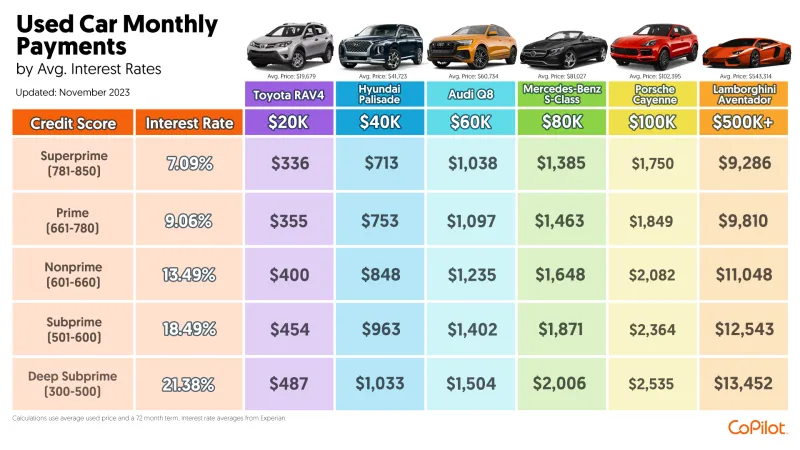
Photo: car subscription service modern dealership monthly payment concept, via static.stacker.com
For more than a century, buying a car in America has followed a familiar script: negotiate a price, secure financing or write a check, and drive away as the vehicle's legal owner. That script, however, is being quietly rewritten by some of the world's most powerful automakers. Vehicle subscription services — monthly payment plans that bundle access to a car with insurance, maintenance, and sometimes the flexibility to swap models — are gaining traction as manufacturers search for more predictable, software-era revenue streams.
The shift is not merely cosmetic. It reflects a profound strategic pivot, one in which automakers no longer see themselves purely as manufacturers of durable goods, but as providers of ongoing mobility experiences. Understanding what that means for American consumers requires looking closely at who is pushing this model, what it actually costs, and whether it represents a durable transformation or an expensive experiment.
From Showrooms to Subscriptions: Who Is Leading the Charge
The subscription concept is not new — Care by Volvo, launched in 2017, was among the first mainstream attempts to offer a fixed monthly fee covering the vehicle, insurance, and maintenance. Since then, the field has grown considerably more crowded. BMW's Access program, Mercedes-Benz's subscription trials in select US markets, and Ford's various fleet and subscription pilots have all signaled that legacy automakers view this model as strategically significant, not merely experimental.
Luxury brands have found particularly fertile ground. Affluent customers who might otherwise lease a high-end vehicle are often attracted by the simplicity of a single monthly bill and the freedom to switch between models — driving an SUV through winter months and transitioning to a performance sedan when weather permits. For these consumers, the subscription model functions less as a financial necessity and more as a lifestyle product.
Startups have also entered the space. Companies like Autonomy and Steer have built entire business models around offering electric vehicle subscriptions, betting that the combination of EV enthusiasm and subscription familiarity — think Netflix, Spotify, and Amazon Prime — will resonate with younger American drivers who have grown up in a subscription economy.
The Economics: Who Actually Benefits
The financial calculus of vehicle subscriptions is more complicated than the marketing materials suggest, and it rarely favors the consumer in the short term. Monthly fees for subscription vehicles typically range from approximately $500 to well over $2,000 depending on the brand and model tier, often exceeding the combined cost of a traditional lease payment plus separate insurance coverage.
What subscribers are paying for, in part, is convenience and flexibility. There are no long-term commitments, no negotiation battles at the dealership, and no surprise maintenance bills. For certain demographics — corporate travelers, residents of high-cost urban areas who need a vehicle only seasonally, or professionals who relocate frequently — those premiums carry genuine value.
For automakers, the appeal is more straightforward. Recurring revenue is predictable revenue. In an era when Wall Street increasingly rewards software companies for their subscription metrics, automotive executives are acutely aware that a customer locked into a monthly vehicle payment represents a fundamentally different asset than one who completed a purchase transaction five years ago and may not return to the brand for another decade. The subscription model creates continuous customer touchpoints, generates data about driving behavior and preferences, and establishes the kind of loyalty loop that traditional ownership rarely produces.
The American Ownership Ethos: A Cultural Obstacle
Any honest assessment of vehicle subscriptions in the United States must grapple with a deeply ingrained cultural reality: Americans have historically viewed car ownership as a form of personal freedom and financial achievement. The notion of never truly owning one's vehicle — of perpetually paying for access rather than building equity — runs counter to values that have shaped American consumer behavior for generations.
Polling and market research consistently show that a majority of American drivers still prefer ownership or traditional leasing over subscription arrangements, particularly outside major metropolitan areas where public transportation alternatives exist. In rural and suburban communities, where a vehicle is not a lifestyle accessory but an essential tool, the economics of subscription models become even harder to justify.
There is also the matter of consumer education. Many Americans remain unfamiliar with how vehicle subscription programs work, what they include, and how they compare financially to conventional purchasing. Until automakers invest meaningfully in demystifying these offerings, adoption will remain concentrated among early adopters and affluent urban professionals.
Over-the-Air Updates and the Connected Revenue Ecosystem
Vehicle subscriptions do not exist in isolation. They are part of a broader industry movement toward what might be called the connected revenue ecosystem — a web of ongoing charges that can include software feature unlocks, premium navigation services, remote start capabilities, and advanced driver assistance upgrades delivered via over-the-air updates.
In this context, the subscription vehicle is less a standalone product and more an entry point into a recurring revenue relationship that extends well beyond the monthly access fee. Automakers are increasingly designing vehicles with hardware capabilities that remain locked until a customer pays to activate them — a model borrowed directly from the software industry and one that fundamentally changes the nature of what it means to own or access a modern automobile.
For consumers, this layered approach raises legitimate questions about value and transparency. If a feature exists in the vehicle's hardware but requires an additional monthly charge to use, is that a service or a surcharge? Regulators and consumer advocacy groups in the US have begun scrutinizing these practices, and the regulatory landscape around automotive subscriptions and feature monetization remains unsettled.
Niche Experiment or Inevitable Future?
The honest answer is that vehicle subscriptions in America currently occupy a middle ground — more than a fleeting experiment, but far short of a mainstream revolution. The infrastructure, consumer familiarity, and pricing structures necessary to make subscriptions a dominant form of vehicle access do not yet exist at scale.
However, demographic trends favor the model's long-term growth. Younger Americans, particularly those in the millennial and Gen Z cohorts, demonstrate greater comfort with access-based consumption across virtually every product category. As this generation ages into peak car-buying years, their tolerance for subscription arrangements is likely to exceed that of their predecessors.
Automakers are banking on precisely that trajectory. The manufacturers investing most aggressively in subscription infrastructure today are positioning themselves for a market that may not fully materialize for another decade — but one they are determined not to miss. Whether that bet pays off will depend as much on pricing discipline and consumer trust as on technological capability.
What is clear is that the traditional dealership transaction, while far from obsolete, is no longer the only model on the table. The American automotive industry is in the early stages of a structural evolution, and the monthly payment — already familiar from smartphones, streaming services, and gym memberships — may yet become as natural a fixture of car culture as the test drive.