More Than Comfort: How Your Car Seat Is Learning to Read Your Body
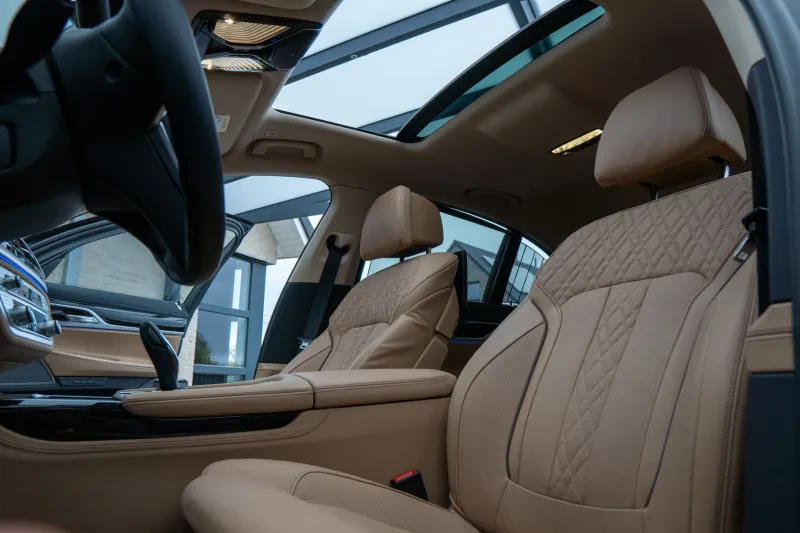
For decades, heated seats were the automotive equivalent of a warm handshake — a welcome amenity that signaled a vehicle's premium ambitions without doing much beyond warming cold denim on a February morning. Massage functions followed, adding a spa-like dimension to long highway commutes. Neither feature demanded much intellectual respect. They were creature comforts, full stop.
That characterization is rapidly becoming obsolete.
Across several major automakers and a growing cluster of Tier 1 suppliers, seating systems are being reengineered from the cushion up. The goal is no longer simply to make occupants comfortable. It is to understand them — and, in doing so, to monitor both human health and mechanical integrity in ways that were unimaginable a decade ago.
The Sensor Revolution Hiding Beneath the Leather
At the core of this transformation is a deceptively simple technology: embedded pressure-mapping arrays. These thin, flexible sensor grids — some developed originally for medical applications in hospital bed design — can be woven into seat foam and upholstery with minimal intrusion. When a driver settles in, the array captures a detailed topographic map of how body weight is distributed across hundreds of individual contact points.
On its own, that data tells you relatively little. But when processed through machine learning algorithms trained on thousands of occupant profiles, patterns emerge that carry real diagnostic weight. Asymmetrical pressure distribution, for instance, can indicate that a driver is unconsciously compensating for lower back discomfort — a behavioral signal that correlates with early-stage lumbar issues. Subtle shifts in sitting posture over the course of a journey can suggest fatigue onset well before a driver consciously registers drowsiness.
Mercedes-Benz has been among the most public about this direction, incorporating biometric monitoring elements into its higher-tier seating packages. The company's wellness programs within its flagship S-Class and EQS models treat the seat as an active health interface rather than a passive surface. Volvo, long positioned as the safety-forward brand in the American market, has similarly invested in occupant-monitoring research that treats postural data as a safety input alongside lane-departure warnings and collision alerts.
From Wellness to Wrench Time
What makes this technology genuinely novel — and what separates it from a simple luxury upgrade — is its dual diagnostic capacity. The same sensors that track a driver's posture can, with appropriate calibration, detect anomalies in the vehicle's own mechanical behavior.
Consider the relationship between road vibration and seat response. A properly functioning suspension system absorbs and attenuates road imperfections in predictable ways. When a shock absorber begins to degrade, or when a bushing wears beyond acceptable tolerances, the vibration signature transmitted through the seat changes in measurable ways. Pressure sensors sophisticated enough to map human anatomy are more than capable of registering these mechanical deviations.
Several suppliers working with OEM partners have begun developing algorithms that cross-reference occupant pressure data with accelerometer inputs to build a real-time picture of suspension health. The practical implication for American drivers — many of whom accumulate substantial mileage on roads that range from smooth interstate to badly deteriorated urban infrastructure — is a seating system that can effectively alert them to developing maintenance needs before those needs become expensive failures.
This represents a meaningful evolution in predictive maintenance, moving the detection point from under-hood diagnostics to the most intimate contact surface between driver and machine.
The Data Question Americans Will Have to Answer
No discussion of biometric vehicle data can proceed without confronting the privacy dimension, and here the technology's promise becomes complicated.
The data these systems generate is, by definition, personal. Spinal health indicators, fatigue patterns, and body-weight distribution profiles constitute sensitive health information. In the United States, where data privacy legislation remains fragmented — varying significantly by state, with California's CCPA representing one of the more rigorous frameworks — the question of who owns this information and how it may be used is far from settled.
Automakers are aware of the exposure. Several have begun framing their wellness seating features around on-device processing, meaning biometric analysis occurs within the vehicle's own computing architecture rather than being transmitted to cloud servers. Whether that commitment holds as connected-vehicle platforms mature and data monetization pressures intensify is a question worth sustained scrutiny.
For consumers, the calculus involves weighing genuine utility — early warning of health concerns, proactive maintenance alerts — against the discomfort of a vehicle that knows, quite literally, how you carry yourself.
Massage as Medicine, Calibration as Consequence
The massage function, once the most frivolous item on an options sheet, is undergoing a similarly serious reimagining. Rather than running on fixed cycles that knead and roll regardless of occupant condition, next-generation systems are designed to respond dynamically to what the seat's sensors detect.
If pressure mapping identifies that a driver has been holding tension in a particular muscle group during an extended commute, the massage system can be triggered automatically, targeting that specific zone. If the system detects that posture has degraded over the course of a long drive — a common precursor to fatigue-related accidents on American interstates — it can intervene with targeted stimulation designed to restore alertness and proper alignment.
This adaptive behavior transforms the massage function from a scheduled amenity into a responsive health tool. The distinction matters. A feature that reacts to real physiological data carries a fundamentally different value proposition than one that simply runs on a timer.
Where the Technology Is Headed
Looking further ahead, suppliers and OEM research teams are exploring integration with wearable health devices. A driver whose smartwatch already tracks heart rate variability and sleep quality could, in theory, share that data with the vehicle's seating system to enable even more personalized occupant monitoring. The seat would function as one node in a broader personal health network, with the vehicle serving as both data collector and intervention platform.
For the US market specifically, where long commutes are a structural feature of daily life for millions of Americans and where healthcare costs create strong incentives for early detection of musculoskeletal issues, the appeal of this convergence is tangible. A vehicle that flags the early warning signs of a disc problem — and schedules a service appointment for a worn strut in the same notification — addresses two pain points with a single system.
The automotive seat has always been the most human interface in the vehicle. Engineers are now taking that description literally, engineering it to observe, interpret, and ultimately act on what the human body communicates. Whether that represents the future of wellness technology, predictive maintenance, or both, one thing is increasingly clear: the era of the passive car seat is coming to a close.