Built to Last: The Engineering Revolution Quietly Extending the Life of Every New Vehicle
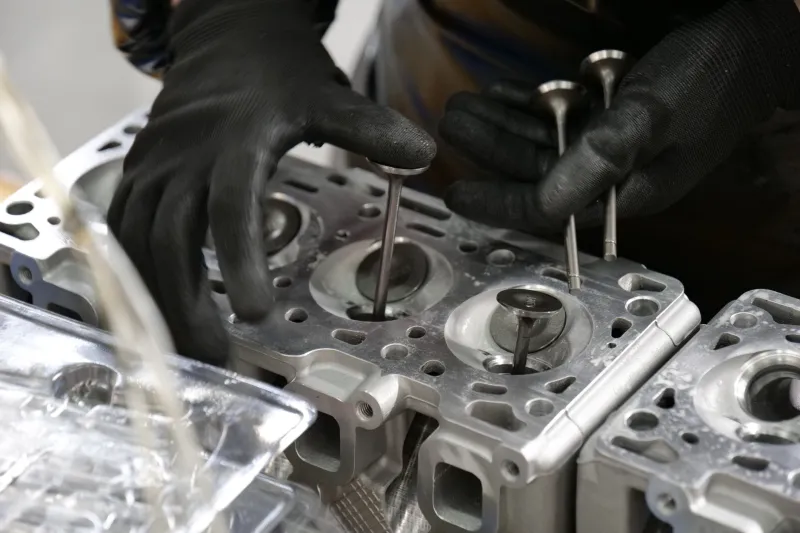
For most of the twentieth century, the American automotive industry operated on an unspoken assumption: vehicles were designed with a finite horizon in mind. Planned obsolescence, while rarely acknowledged openly, shaped decisions at every level of the engineering process. Components were specced to meet warranty requirements, not to outlast them. That calculus is changing — and the shift is more consequential than most drivers realize.
Today's automakers are embedding longevity into the DNA of their vehicles, driven by a convergence of consumer expectations, sustainability mandates, and the rising cost of materials. The result is a quiet engineering revolution that is fundamentally altering how long a car can reasonably remain on the road — and what that means for buyers, the used car market, and the broader mobility ecosystem.
From Corrosion Resistance to Structural Integrity
One of the most significant advances in vehicle durability has occurred in materials science. Galvanized steel, once reserved for premium segments, is now standard across much of the industry. Automakers including Ford, General Motors, and Stellantis have expanded the use of high-strength steel alloys and aluminum composites in body panels and structural members, reducing both weight and susceptibility to oxidative degradation.
Beyond steel, the proliferation of advanced polymers and fiber-reinforced plastics in underbody panels, wheel wells, and suspension components has addressed one of the most persistent failure points in American vehicles: the relentless assault of road salt, moisture, and thermal cycling that characterizes driving conditions across the Rust Belt and the northern United States. Newer coatings — including electrodeposition primers applied at the molecular level — have extended the effective corrosion resistance of body structures from roughly ten years in older models to twenty or more in current-generation vehicles.
The engineering philosophy behind these changes reflects a broader recognition that durability and sustainability are not competing values. A vehicle that lasts longer consumes fewer manufacturing resources over time, a point that resonates with both environmentally conscious consumers and corporate sustainability teams navigating increasingly stringent regulatory frameworks.
Modular Design and the Repairability Imperative
Perhaps the most underappreciated dimension of the longevity revolution is the shift toward modular component architecture. Traditionally, vehicle systems were integrated in ways that made individual component replacement difficult, expensive, or effectively impossible without specialized dealer equipment. A failing sensor embedded in a complex assembly might necessitate the replacement of an entire subsystem — a cost that frequently pushed older vehicles into the salvage market prematurely.
Engineers at several major automakers have begun redesigning critical systems with discrete, replaceable modules in mind. Suspension corner assemblies, transmission control units, and even battery management systems in hybrid vehicles are increasingly being architected so that a single failing element can be swapped without condemning the surrounding hardware. This approach reduces repair costs and extends the practical ownership window for consumers who choose to maintain their vehicles rather than trade them in.
The electric vehicle sector has accelerated this trend considerably. Because EV powertrains lack many of the mechanical components — timing chains, gaskets, exhaust systems — that traditionally drove repair costs in internal combustion vehicles, manufacturers have been compelled to think more carefully about the longevity of the components that remain. Battery pack modularity, in particular, has become a focal point of engineering investment, with several manufacturers now designing packs that allow individual cell groups to be replaced rather than requiring full pack substitution.
What Longer-Lasting Vehicles Mean for Resale Value
The downstream effects of improved vehicle durability are already registering in the used car market. According to data from industry analysts, the average age of vehicles on American roads has climbed steadily over the past two decades, reaching a record high of approximately 12.5 years in recent years. That figure reflects not merely economic pressure on consumers to delay new vehicle purchases, but a genuine increase in the functional lifespan of the vehicles themselves.
For buyers considering long-term ownership, the implications are straightforwardly positive. A vehicle engineered to maintain structural integrity and powertrain reliability well past the 150,000-mile threshold represents a meaningfully different value proposition than one that begins generating significant repair costs at 80,000 miles. Depreciation curves are also shifting in response: vehicles with documented durability records and lower lifetime maintenance costs are commanding stronger residual values at auction, a dynamic that benefits both fleet operators and private sellers.
Dealers and independent repair shops are adapting as well. The availability of modular replacement components and the growing sophistication of diagnostic technology mean that vehicles once considered uneconomical to repair are increasingly being returned to serviceable condition at competitive cost points.
Sustainability as a Design Mandate
The longevity engineering movement intersects directly with the automotive industry's sustainability agenda. Manufacturing a new vehicle is an energy-intensive process, and the environmental case for extending the useful life of existing vehicles is compelling. When a car remains operational for fifteen or twenty years rather than ten, the carbon cost of its production is amortized across a longer service life — a calculation that matters to automakers navigating fleet emissions targets and ESG reporting requirements.
Several manufacturers have begun incorporating recycled and bio-based materials into interior components, not merely as a sustainability statement but as a practical response to supply chain volatility. These materials, in many cases, offer comparable or superior durability to their petroleum-derived predecessors, aligning commercial and environmental incentives in ways that were not previously achievable.
The right-to-repair movement, while primarily a policy debate, has also exerted pressure on automakers to design vehicles that independent technicians can service without proprietary tools or exclusive software access. Legislative momentum in several states is reinforcing that pressure, nudging manufacturers toward greater repairability as both a legal and market-driven imperative.
The Road Ahead
The engineering philosophy taking hold across the industry reflects a maturing understanding of what consumers actually want from their vehicles. Reliability, repairability, and longevity have always ranked among the highest priorities in consumer surveys — ahead of performance specifications that dominate press releases. What has changed is the industry's capacity and willingness to deliver on those priorities in a systematic, architecturally deliberate way.
For American drivers, the practical benefits are tangible: lower lifetime ownership costs, stronger resale values, and the confidence that comes with knowing a vehicle has been engineered to endure rather than merely to impress at the point of purchase. For the industry, the shift represents an opportunity to rebuild a form of trust that years of planned obsolescence eroded.
The best vehicles being built today are not just more capable than their predecessors. They are, by measurable engineering standards, more durable — and that may ultimately prove to be the most meaningful innovation of the modern automotive era.