The Dragon Enters the Showroom: How Chinese Automakers Are Positioning to Reshape the US Market
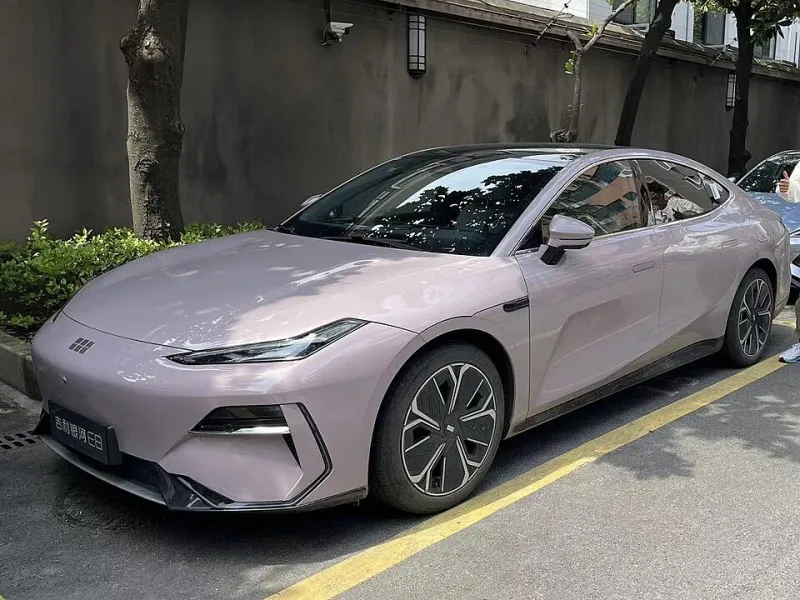
Photo: JustAnotherCarDesigner, CC0, via Wikimedia Commons
The American automotive showroom has always been a competitive arena — Detroit versus Tokyo, domestic muscle versus European precision. The next chapter of that rivalry, however, is shaping up to be the most consequential in decades, as Chinese automakers execute a deliberate, well-funded strategy to establish themselves as credible players in the world's second-largest vehicle market.
It is a campaign that has been building quietly for years, largely beneath the radar of the average American car buyer. But the signals are now unmistakable, and the implications for competition, pricing, and technological development in the US market are profound.
A Different Kind of Competitor
Understanding what Chinese automakers represent requires setting aside conventional assumptions about emerging market manufacturers. Companies such as BYD, SAIC, Nio, and Geely are not the budget-focused, quality-compromised entrants that characterized earlier waves of foreign market penetration. They are, in several meaningful respects, technologically sophisticated enterprises that have leapfrogged traditional development timelines by focusing almost exclusively on electric powertrains from the outset.
BYD — Build Your Dreams — is the most instructive example. The Shenzhen-based manufacturer surpassed Tesla in global EV sales volume in 2023 and has developed its own vertically integrated battery supply chain, controlling lithium iron phosphate cell production in a way that gives it cost advantages that Western automakers are only beginning to replicate. Its Blade Battery technology, engineered to address thermal runaway risks that have plagued competing chemistries, represents genuine innovation rather than incremental refinement.
Geely, meanwhile, has pursued a sophisticated acquisition strategy, accumulating ownership stakes in Volvo, Lotus, and a significant share of Mercedes-Benz, effectively embedding itself within the architecture of respected Western brands while building technical expertise and global distribution networks.
"What Chinese manufacturers have done is compress a 40-year development arc into roughly 15 years by concentrating investment in the technology that matters most right now: batteries, software, and manufacturing efficiency," said one senior analyst at a Detroit-based automotive consultancy who has spent years tracking the sector. "That's not luck. That's strategic clarity."
The Regulatory Wall — And the Routes Around It
For all their competitive momentum, Chinese automakers face a formidable set of barriers at the US border. The Biden administration's decision to raise tariffs on Chinese-manufactured electric vehicles to 100 percent — a policy the current administration has maintained — effectively prices direct imports out of the mass market. A BYD Seagull that retails for under $10,000 in China would carry a price tag that erases its affordability advantage entirely after tariffs, logistics costs, and compliance expenses are factored in.
The Inflation Reduction Act adds another layer of complexity. Its provisions restricting EV tax credits for vehicles assembled by companies with significant ties to "foreign entities of concern" — a designation that encompasses major Chinese manufacturers — create a structural disadvantage for any brand attempting to sell Chinese-made vehicles while accessing federal incentives.
But the regulatory wall, while real, is not impermeable. The most plausible path for Chinese automakers into the American market runs through manufacturing on American soil or in tariff-advantaged partner countries. Discussions around potential assembly facilities in Mexico — which benefits from USMCA trade provisions — have circulated within the industry for several years, though geopolitical pressure has complicated those conversations. Volvo, under Geely ownership, already operates a manufacturing facility in Berkeley County, South Carolina, providing a proof of concept for how Chinese-affiliated capital can establish a credible American manufacturing footprint.
Joint ventures with established American or American-aligned brands represent another viable strategy. SAIC's long-standing partnerships with General Motors in China demonstrate the appetite for collaborative arrangements, and several industry observers anticipate that technology licensing deals — where Chinese battery or software capabilities are embedded within vehicles assembled domestically — may prove to be the most politically viable entry point.
What American Consumers Stand to Gain
The competitive pressure exerted by Chinese manufacturers, even from outside US borders, is already producing measurable effects on the domestic market. The aggressive pricing of BYD's global lineup has contributed to the accelerating price compression visible across the EV segment, as Ford, GM, and Tesla have each made significant downward adjustments to remain competitive in a market where affordability has emerged as the primary barrier to broader adoption.
Should Chinese manufacturers establish a genuine retail presence in the United States — whether through domestic assembly, brand partnerships, or other structural arrangements — the impact on consumer pricing could be substantial. Estimates from several independent research firms suggest that meaningful Chinese competition in the sub-$30,000 EV segment could accelerate market penetration by three to five years relative to current projections, bringing electric mobility within reach of a significantly broader swath of the American middle class.
Beyond pricing, the technological competition itself benefits consumers. Battery energy density improvements, faster charging architectures, and more sophisticated vehicle software are areas where Chinese manufacturers are investing aggressively, and competitive pressure has a well-documented history of accelerating innovation timelines industry-wide.
The Tesla Question
No analysis of Chinese EV ambitions in America is complete without addressing Tesla, the brand that defined the segment's aspirational identity and still commands the largest share of the US EV market. Tesla's position, while formidable, is not impregnable. Its product lineup has aged relative to Chinese competitors that refresh models on compressed cycles, and its charging network advantage — historically its most durable competitive moat — has eroded as the NACS connector standard has been adopted by legacy automakers.
BYD and Nio, in particular, have developed charging and battery-swap technologies that address range anxiety in ways that could resonate with American consumers if those companies achieve meaningful market access. Whether Tesla retains its leadership position in a more genuinely competitive landscape will depend heavily on how aggressively it continues to invest in next-generation battery technology and whether its software ecosystem remains differentiated.
A Market in Transition
The arrival of Chinese automakers as serious competitors in the US market is not a question of whether, but when and through what mechanisms. Regulatory barriers are real and consequential, but they are not permanent fixtures — trade policy evolves, manufacturing geographies shift, and technological advantages have a way of finding market expression regardless of the walls constructed around them.
For American consumers, the prospect of genuine global competition in the electric vehicle segment is largely positive: more choices, better technology, and downward pressure on prices that have kept EVs out of reach for too many households. For domestic manufacturers, the challenge is to compete on merit — in manufacturing efficiency, software capability, and battery innovation — rather than rely on regulatory protection as a permanent substitute for competitiveness.
The next chapter of American automotive history is being written not only in Detroit and Silicon Valley, but in Shenzhen, Shanghai, and Hangzhou. Paying attention to all of those datelines is no longer optional.