Charged Up and Going Nowhere: Why EV Range Anxiety Is More Perception Than Reality in 2025
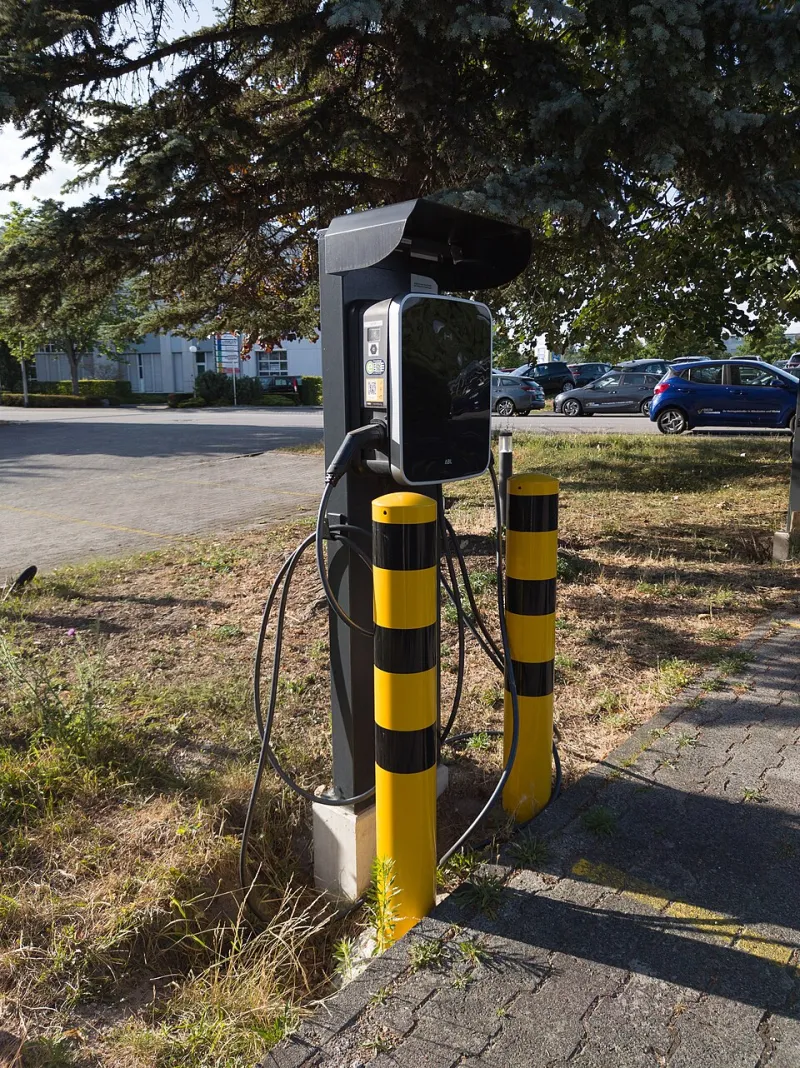
Photo: Matti Blume, CC BY-SA 4.0, via Wikimedia Commons
Few phrases have shaped — and arguably distorted — the public conversation around electric vehicles quite like "range anxiety." Coined in the early days of mass-market EV adoption, the term conjures images of stranded motorists on darkened interstates, desperately searching for a charging station that may or may not exist. It is a compelling narrative. It is also, for most Americans in 2025, largely a fiction.
The data tells a different story than the fear does.
What Americans Actually Drive Every Day
Before evaluating whether electric vehicles are capable of meeting real-world demands, it is worth establishing what those demands actually look like. According to the Federal Highway Administration, the average American drives approximately 37 miles per day. The U.S. Department of Transportation's National Household Travel Survey reinforces this figure, finding that roughly 95 percent of all personal vehicle trips in the United States cover fewer than 30 miles.
Read that again: 95 percent.
Now consider that the 2024 and 2025 model year electric vehicles available at mainstream dealerships across the country routinely deliver EPA-estimated ranges of 250 to 350 miles on a single charge. The Chevrolet Equinox EV, positioned as an accessible entry point for mainstream buyers, carries an EPA-estimated range of up to 319 miles. The Tesla Model 3 Long Range variant exceeds 340 miles. Even more modestly priced options like the Nissan Ariya offer upward of 300 miles in their longer-range configurations.
The arithmetic is not complicated. A vehicle capable of traveling 300 miles between charges, used by a driver who travels an average of 37 miles daily, would theoretically need charging roughly once every eight days under normal circumstances — assuming the driver never plugged in at home overnight, which most EV owners do as a matter of routine.
EPA Ratings vs. the Real World: A Nuanced Gap
Skeptics frequently point to the gap between EPA-rated range and real-world performance as evidence that electric vehicle capabilities are overstated. This critique carries some validity, but context matters enormously.
EPA range figures are derived from standardized laboratory testing cycles — the same methodology applied to gasoline-powered vehicles when calculating fuel economy. Cold weather, highway speeds above 70 miles per hour, aggressive climate control use, and heavy cargo loads will reduce the effective range of any electric vehicle, sometimes significantly. In extreme cold, some EVs have reported range reductions of 20 to 40 percent.
However, the same real-world variables affect internal combustion engine vehicles as well. A gasoline-powered SUV rated at 28 miles per gallon in combined driving will routinely return 22 to 24 miles per gallon in stop-and-go urban traffic or during sustained highway cruising. The principle of laboratory ratings diverging from real-world outcomes is not unique to electric powertrains — it is simply more scrutinized.
Data aggregated by Recurrent, a firm that tracks real-world EV battery performance across hundreds of thousands of vehicles, consistently shows that most electric vehicles deliver between 70 and 90 percent of their EPA-rated range under typical driving conditions. Even at the lower end of that spectrum, a vehicle rated at 300 miles would realistically deliver 210 miles of usable range — still far exceeding the daily requirements of the overwhelming majority of American commuters.
The Charging Infrastructure Equation
Range anxiety is not solely about battery capacity. It is also about access to charging infrastructure, and this is where the narrative has evolved most dramatically over the past two years.
The United States now hosts more than 180,000 public EV charging ports, a figure that has more than doubled since 2021, according to the Alternative Fuels Station Locator maintained by the Department of Energy. The national expansion of Tesla's Supercharger network — now open to non-Tesla vehicles through the North American Charging Standard (NACS) adapter — has added tens of thousands of fast-charging stalls to the broader ecosystem. Ford, General Motors, Rivian, and other major manufacturers have committed to NACS compatibility, accelerating interoperability across the charging landscape.
For drivers who own single-family homes, the calculus is even simpler. A standard Level 2 home charger — typically installed for between $500 and $1,500 including equipment and labor — can replenish 20 to 30 miles of range per hour. An owner who plugs in each evening wakes to a full battery every morning, eliminating the charging stop from the equation entirely.
Where the Concern Remains Legitimate
Intellectual honesty demands acknowledging that range anxiety is not entirely without basis. Apartment dwellers and renters who lack access to dedicated home charging face genuine logistical challenges. Drivers who regularly undertake long-distance road trips — particularly through rural corridors where charging infrastructure remains sparse — must plan their routes more deliberately than they would in a gasoline-powered vehicle.
Battery performance in sustained sub-zero temperatures, a reality for drivers in Minnesota, Wisconsin, and the northern Great Plains, also warrants serious consideration. Thermal management technology has improved substantially, and manufacturers including Rivian and BMW have invested heavily in battery preconditioning systems that mitigate cold-weather degradation, but the challenge has not been fully eliminated.
These are real constraints, not manufactured ones. But they affect a distinct minority of use cases, not the broad majority.
The Psychology of a Perception Problem
Perhaps the most illuminating data point in this entire conversation comes not from battery specifications but from owner surveys. J.D. Power's annual Electric Vehicle Experience Study has repeatedly found that EV owners report significantly higher satisfaction scores than non-owners anticipate. Prospective buyers consistently overestimate the frequency with which they would encounter range-related problems. Actual owners, by contrast, report that range anxiety fades quickly after purchase — typically within the first few weeks of ownership.
This gap between anticipated and experienced anxiety suggests that the issue is as much psychological as it is technical. Familiarity with how an EV integrates into daily routines appears to dissolve much of the apprehension that precedes ownership.
Moving the Conversation Forward
The automotive industry is at an inflection point. Battery energy density continues to improve, solid-state battery technology is advancing toward commercial viability, and charging infrastructure is expanding at a pace that would have seemed optimistic just five years ago. The vehicles available to American consumers in 2025 are not the range-limited compliance cars of a decade ago.
For the 95 percent of American drivers whose daily mileage falls well within the operational parameters of current electric vehicles, range anxiety is less a rational concern than an inherited fear — a product of early-adoption narratives that no longer reflect the technology on the road today.
The data has moved. The question is whether public perception will follow.