Showroom Reckoning: How the Rise of Direct EV Sales Is Rewriting the Rules of American Auto Retail
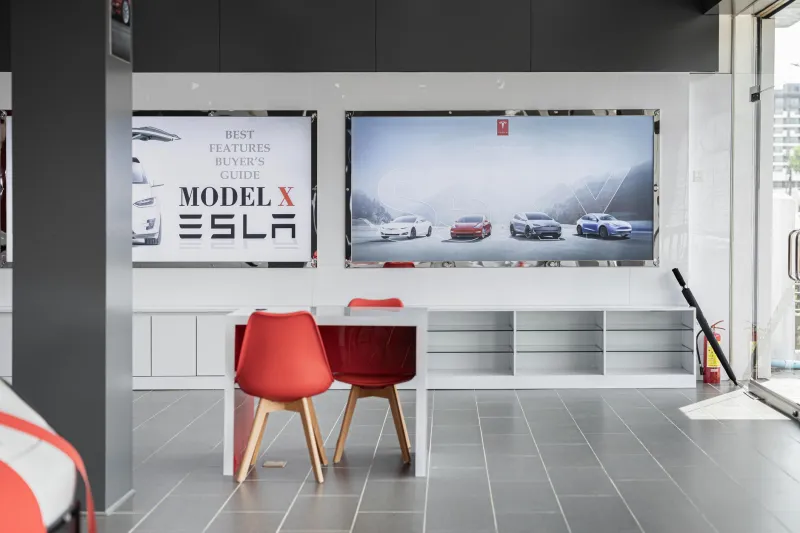
For most of the twentieth century, the American car-buying experience followed a familiar script. You walked onto a lot, negotiated with a salesperson, signed a stack of paperwork in a back office, and drove home in something that smelled of fresh upholstery and dealer-applied sealant. That script, largely unchanged since the postwar era, is now being torn apart — not by consumer preference alone, but by the structural ambitions of a new generation of automakers who never wanted to play by franchise rules in the first place.
Tesla did not invent the automobile. What it did invent — or at least aggressively normalize — was the idea that a car company could sell directly to buyers without a franchised intermediary. That concept, radical in its simplicity, has since been adopted by Rivian, Lucid, Fisker before its collapse, and a growing list of emerging brands. And it has placed the traditional dealership network — a system representing hundreds of thousands of American jobs and billions in annual revenue — in an uncomfortable position of institutional uncertainty.
A Century-Old System Under Pressure
Franchise dealerships did not emerge by accident. They were the logical solution to a distribution problem that existed when manufacturers lacked the capital and infrastructure to sell, service, and finance vehicles at scale. State franchise laws, enacted throughout the mid-twentieth century, codified the relationship, granting dealers significant legal protections against manufacturer interference — including, in most states, the right to prohibit direct sales entirely.
Those laws remain on the books in the vast majority of US states, and they have become the primary legal battleground in the direct-sales conflict. Tesla spent years litigating its right to operate company-owned showrooms and service centers, winning in some states and accepting workarounds in others. In Texas, one of the country's largest automotive markets, Tesla cannot legally complete a vehicle sale at its own locations — customers must finalize transactions online. The result is a patchwork of retail experiences that varies dramatically depending on which side of a state line you happen to live on.
"The laws were written to protect dealers from manufacturers, not to protect consumers," said one automotive retail analyst who has advised both franchise groups and emerging EV brands. "But in practice, they've become a mechanism that slows the adoption of new retail models regardless of whether those models actually serve buyers better."
What Direct Sales Actually Offers — and What It Doesn't
Proponents of direct-to-consumer retail point to a streamlined experience as its central virtue. Fixed pricing eliminates the negotiation dynamic that many buyers find stressful. Online configuration tools allow customers to specify exactly what they want before setting foot in a physical space. Delivery can often occur at home. For a segment of the market — particularly tech-comfortable, urban, higher-income buyers who represent the early EV adopter profile — this model resonates strongly.
But the direct model carries its own friction points, and they become more apparent as EV brands scale. Service infrastructure is the most persistent challenge. Tesla's service network, while significantly expanded from its early days, still draws criticism for appointment availability and turnaround times in high-density markets. Rivian, whose customer base is spread across geographically dispersed rural and suburban areas, has faced acute service access complaints. When something goes wrong with a traditionally purchased vehicle, the nearest franchise dealer is rarely more than a short drive away. When something goes wrong with a direct-sale EV, the nearest authorized service point may be in the next metropolitan area.
"The franchise system, for all its inefficiencies, solved the last-mile service problem," noted one veteran dealer principal operating multiple domestic brand franchises in the Midwest. "You can't underestimate how important it is to have someone nearby who can actually fix the car."
Legacy Dealers Respond — With Varying Degrees of Urgency
Not every traditional dealership is waiting passively for the market to make decisions for them. Across the country, franchise groups — particularly the large publicly traded dealer conglomerates — are investing heavily in EV-specific infrastructure, staff retraining, and digital retail capabilities designed to narrow the experiential gap between legacy and direct-sale models.
Some manufacturers have attempted hybrid approaches that preserve the franchise relationship while borrowing elements of the direct model. Ford's EV certification program, which requires dealers to meet specific investment thresholds for charging infrastructure and sales training, represents one version of this compromise. General Motors has pursued similar tiered approaches. The underlying logic is consistent: rather than dismantle the existing network, upgrade it to meet the demands of an electrified market.
The tension, however, is real. Several Ford dealers publicly declined to participate in the certification program, citing the capital requirements as prohibitive relative to projected EV volume in their markets. Others questioned whether manufacturer-controlled pricing — a feature of some hybrid models designed to mirror the fixed-price appeal of direct sales — undermined the economic autonomy that franchise ownership is supposed to guarantee.
"We've operated this store for three generations," said one dealer in a mid-sized Southern market. "We understand the business. What we're being asked to do now is essentially become a showroom and service center for a product we have less and less control over pricing and inventory on. That's a fundamentally different business."
The Regulatory Terrain Continues to Shift
State legislatures have become the arena where the direct-sales debate plays out most consequentially. Several states have moved in recent years to either loosen franchise protections for new entrants — typically defined as manufacturers without an existing dealer network — or to tighten them in response to lobbying from established dealer associations.
The National Automobile Dealers Association remains one of the most active lobbying organizations in the country, and its state-level affiliates have proven effective at defending franchise law provisions in legislatures where the political calculus favors incumbent business interests. The counter-pressure comes from EV advocacy groups, some consumer organizations, and occasionally from the manufacturers themselves, who argue that outdated distribution laws impede their ability to compete with international brands operating under different structural constraints.
Federal involvement remains limited, though not absent. The broader policy environment around EV adoption — including infrastructure investment and purchase incentives — creates indirect pressure on the retail question, since a distribution system that creates friction in the buying process arguably works against stated federal goals of accelerating electrification.
What the Future Showroom Might Look Like
The most likely outcome is not a clean victory for either model, but a sustained period of structural hybridization. Direct-sale brands will continue operating where law permits, refining their service infrastructure and expanding their physical presence in high-volume markets. Legacy dealers will evolve — some more successfully than others — into experience-oriented retail environments that emphasize service relationships, test drive access, and community engagement over transactional volume.
Consumers, meanwhile, will benefit from the competition between models, even if the transition is uneven. The pressure that direct sales places on traditional dealers to improve transparency, reduce friction, and invest in the EV knowledge their customers increasingly demand is, by most measures, a constructive force.
The dealership as Americans have known it is not disappearing. But the version that survives the next decade will look meaningfully different from the one that dominated the last century — and the automakers, dealers, and regulators willing to acknowledge that reality earliest will be best positioned to shape what replaces it.