America's Auto Industry Comes Home: The Forces Driving a Manufacturing Renaissance
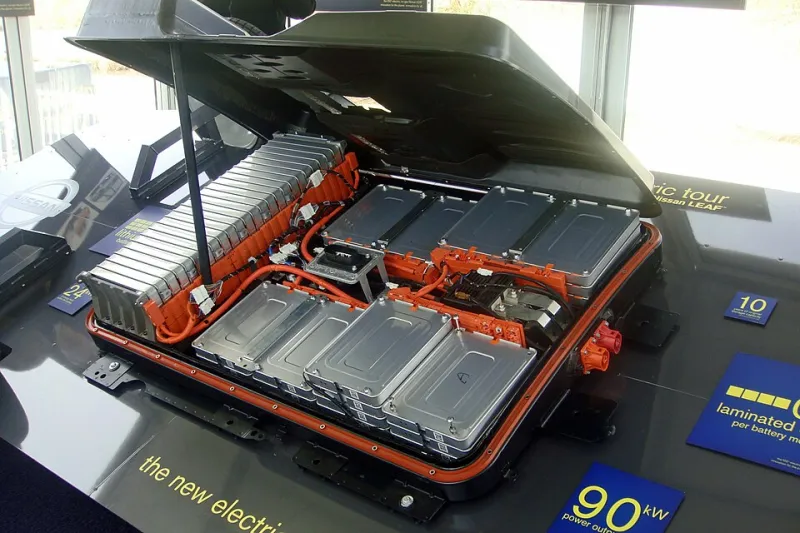
Photo: Mariordo Mario Roberto Duran Ortiz, CC BY-SA 3.0, via Wikimedia Commons
For much of the past three decades, the story of American automotive manufacturing was one of gradual dispersal — production lines migrating to lower-cost regions abroad, supply chains stretching across multiple continents, and domestic facilities closing with quiet regularity. That narrative is now being rewritten, and the revision is happening faster than many industry observers anticipated.
A combination of policy incentives, geopolitical pressure, and hard-won supply chain lessons has prompted automakers and their tier-one suppliers to reassess the logic of global dispersion. What is emerging in its place is a more deliberate effort to concentrate critical manufacturing capacity within US borders — particularly for the electric vehicle components that will define the industry's next chapter.
The Catalysts Behind the Shift
No single event triggered the reshoring movement, but the COVID-19 pandemic served as an accelerant that exposed the fragility of globally extended supply chains in ways that quarterly earnings reports never quite captured. When semiconductor shortages idled assembly plants across the country in 2021 and 2022, costing the industry an estimated $210 billion in lost revenue according to consulting firm AlixPartners, the abstract risk of supply chain concentration became concrete and costly.
The federal government responded with legislative tools designed to redirect investment. The CHIPS and Science Act of 2022 targeted semiconductor manufacturing, while the Inflation Reduction Act introduced a restructured electric vehicle tax credit with explicit domestic content requirements. To qualify for the full $7,500 consumer credit, a vehicle must meet thresholds for North American final assembly and for the sourcing of battery components and critical minerals. Those requirements, which tighten progressively through 2029, have functioned as a powerful gravitational pull on investment decisions.
Geopolitical friction with China has reinforced these dynamics. Chinese manufacturers currently dominate the global supply of battery cathode materials, processed lithium, and several other inputs essential to EV production. The prospect of dependence on Chinese supply chains for the components underpinning America's automotive future has prompted both private caution and public policy responses, including targeted tariffs and domestic production incentives.
New Hubs and Retooled Facilities
The geographic footprint of this manufacturing revival is taking shape across a broad swath of the country, with some regions emerging as focal points for new investment.
The so-called Battery Belt — stretching from Michigan through Ohio, Indiana, Kentucky, Tennessee, and Georgia — has attracted the largest share of announced battery gigafactory investment. BlueOval SK, the joint venture between Ford and SK On, is constructing a pair of battery plants in Kentucky and a massive EV assembly complex in Tennessee. GM's Ultium Cells joint venture with LG Energy Solution has committed to plants in Ohio, Tennessee, Michigan, and most recently Indiana. Stellantis and Samsung SDI have announced a facility in Kokomo, Indiana, a city with deep ties to the auto industry's traditional manufacturing base.
Beyond batteries, semiconductor fabrication is returning to American soil in ways that will directly benefit automotive supply chains. TSMC's Arizona facility and Intel's expanded domestic operations represent long-term investments in the kind of chip production capacity that the industry learned it could not afford to source exclusively from overseas.
Legacy facilities are also being transformed rather than abandoned. GM's Factory Zero in Detroit and Hamtramck — a plant that once built Chevrolet Impalas and Cadillac sedans — has been retooled for electric truck and SUV production, including the GMC Hummer EV and Cadillac Lyriq. Ford's Rouge Electric Vehicle Center in Dearborn, Michigan, where the F-150 Lightning is assembled, occupies the same grounds where Henry Ford built his vertically integrated manufacturing empire a century ago. The symbolism is not lost on the company's marketing team, nor on the workers who build the trucks.
Regional Winners and the Competition for Investment
State governments have become aggressive competitors for automotive investment, deploying tax incentives, workforce training programs, and infrastructure commitments to attract facilities. Georgia's success in landing Rivian's second assembly plant and Hyundai's Metaplant America facility in Bryan County has drawn considerable attention, positioning the state as a rising force in EV manufacturing outside the traditional Midwest corridor.
Texas has leveraged Tesla's Gigafactory in Austin to anchor a broader ecosystem of suppliers and related manufacturers. South Carolina continues to expand its automotive footprint, with BMW's Spartanburg plant serving as the hub of a growing supplier network. These developments signal that the reshoring trend is not simply reinforcing the old Detroit-centric model but distributing manufacturing capacity more broadly across the country.
For communities hosting these investments, the economic impact extends well beyond the direct employment at the facility itself. A battery gigafactory employing 2,500 workers typically generates several times that number of indirect jobs in construction, logistics, maintenance, and the supplier ecosystem. The Brookings Institution has documented how automotive manufacturing investment tends to create durable, higher-wage employment in regions that have historically struggled following the decline of traditional industrial activity.
The Competitive Stakes
The urgency underlying this reshoring push is not merely about jobs or supply chain resilience — it is about maintaining competitive relevance in a global EV market where Chinese manufacturers have built formidable advantages in cost, scale, and technology.
BYD, CATL, and a cohort of Chinese EV makers have benefited from years of sustained government support, vertically integrated supply chains, and a domestic market that has served as a proving ground for rapid product iteration. Their vehicles, while largely excluded from the US market by tariffs, are competing aggressively in Europe, Southeast Asia, and Latin America — markets where American automakers also have significant interests.
Building a robust domestic EV manufacturing base is, in this context, both a defensive and an offensive strategy. It reduces exposure to geopolitical disruption, satisfies the domestic content requirements that unlock federal incentives, and positions American manufacturers to compete on cost as production volumes scale and learning curves steepen.
A Work in Progress
The reshoring of American auto manufacturing is neither complete nor guaranteed to proceed without setbacks. Several announced projects have faced delays, and the financial pressures of transitioning to EV production while managing legacy ICE business lines remain significant. Labor costs in the United States are substantially higher than in many competing regions, a reality that no amount of automation fully eliminates.
Nevertheless, the trajectory is clear. The investment announcements of the past three years represent a fundamental reorientation of where the industry intends to build the vehicles of the coming decade. For the workers, communities, and companies involved, the reshoring revolution is not a nostalgic return to the past — it is an attempt to claim a competitive position in a future that is being contested on factory floors from Georgia to Michigan to Arizona.