Plugged Into the Grid: How Bidirectional EV Charging Could Pay Your Electric Bill
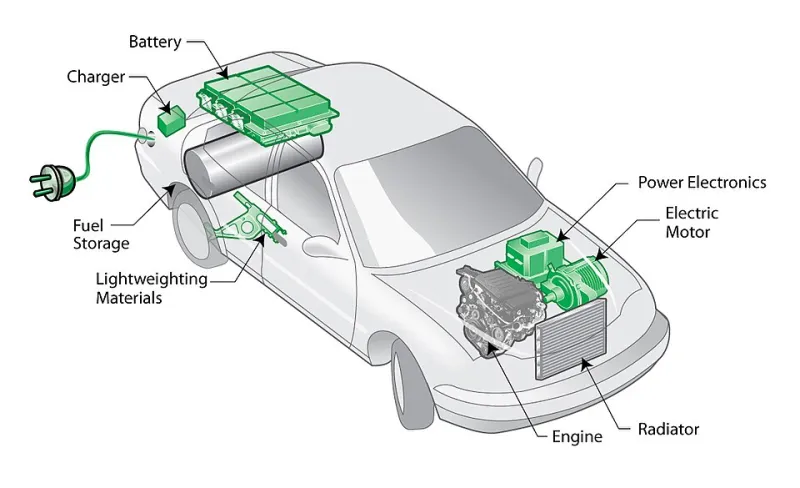
Photo: Matt Howard, CC BY-SA 2.0, via Wikimedia Commons
For most Americans, an electric vehicle represents a destination for electrons — a machine that consumes electricity and, in return, delivers miles. But a growing coalition of automakers, utilities, and technology developers is advancing a fundamentally different vision: one in which your parked EV becomes a mobile energy asset, capable of sending power back into the grid when demand spikes and utilities need it most.
This is the promise of vehicle-to-grid technology, commonly abbreviated as V2G. And while it has existed in experimental form for well over a decade, a convergence of regulatory momentum, infrastructure investment, and consumer-ready hardware suggests that 2025 may be the year it begins to move from pilot program to mainstream practice.
What Bidirectional Charging Actually Means
Conventional EV charging is a one-way street. Electricity flows from the grid into the battery, and the vehicle stores it until the driver needs it. Bidirectional charging reverses that flow — or more precisely, it enables it to flow in both directions depending on conditions.
Vehicle-to-grid, or V2G, is the most ambitious application of this capability. Under a V2G arrangement, a utility or grid operator can draw on the stored energy in a fleet of parked EVs during high-demand periods, compensating owners for the electricity they contribute. A related but simpler use case, vehicle-to-home (V2H), allows the EV to power the owner's residence during an outage or during peak rate hours — functioning essentially as a very large backup battery.
Nissan pioneered early V2G demonstrations with the Leaf, and Ford made headlines when it marketed the F-150 Lightning's Pro Power Onboard capability as a job-site generator. More recently, Volkswagen, GM, and several startups have announced hardware and software platforms designed to support bidirectional energy flow. The 2024 model year saw a meaningful uptick in production vehicles equipped with the necessary onboard charger architecture.
The Economics of Selling Electrons
The financial case for V2G participation hinges on a concept utility analysts call demand response. During periods of extreme grid stress — think a July heat wave in Phoenix or a polar vortex descending on the Midwest — wholesale electricity prices can spike dramatically. Utilities that can draw on distributed resources, including EV batteries, avoid the cost of spinning up expensive peaker plants.
For the EV owner, this translates into credits, direct payments, or reduced electricity rates, depending on the program structure. Pacific Gas & Electric in California and Eversource in New England have both piloted demand-response programs that include EV participation. Early results suggest that engaged participants in California's programs have offset meaningful portions of their annual charging costs.
The numbers vary by market and program design, but industry analysts at Wood Mackenzie have estimated that a V2G-capable EV owner participating actively in a well-structured utility program could potentially recover between $400 and $1,500 annually, depending on battery size, local electricity prices, and the frequency of grid events. Those figures are not guaranteed — they represent optimistic but plausible scenarios in high-value markets.
Infrastructure and Regulatory Friction
Despite the appeal, V2G faces a set of structural challenges that have slowed its rollout in the United States.
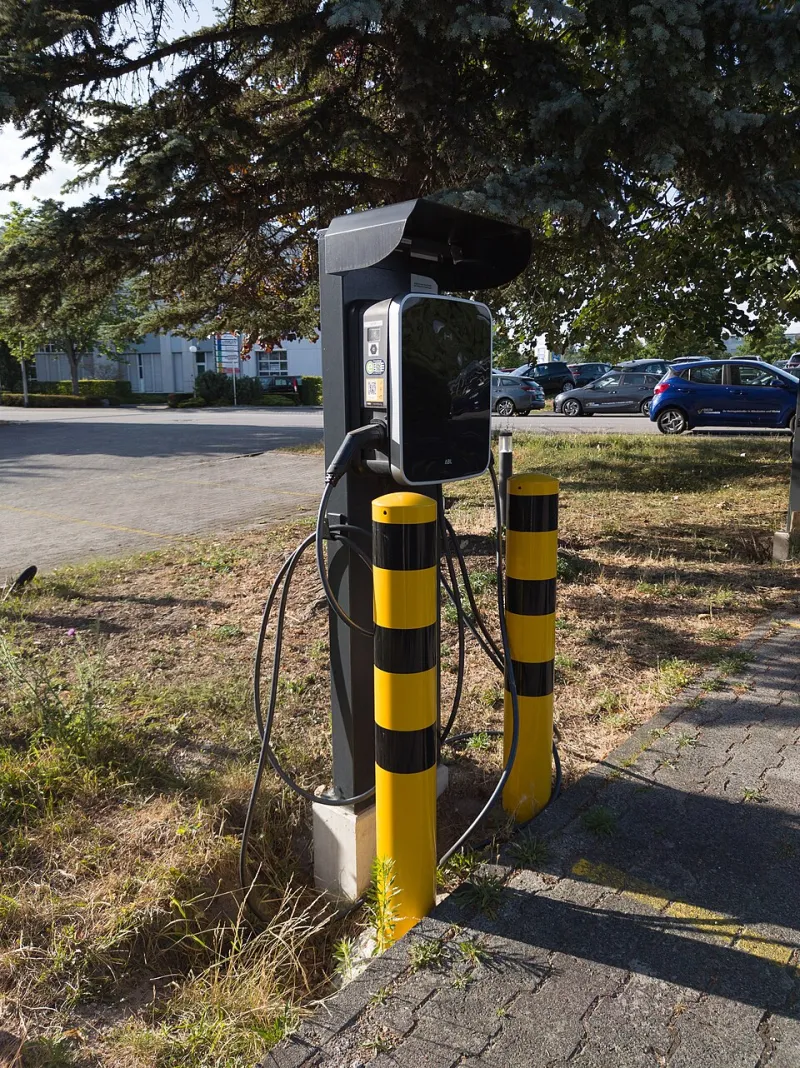
The first is hardware fragmentation. Bidirectional charging requires compatible onboard chargers in the vehicle, compatible charging equipment at the home or facility level, and software integration between the vehicle, the charger, and the utility's grid management systems. Today, those three layers rarely communicate seamlessly. The CHAdeMO standard, used by Nissan, supports V2G relatively well. The Combined Charging System, or CCS, which dominates the US market, has been slower to incorporate bidirectional capability, though the emerging NACS standard backed by Tesla and now adopted across much of the industry is expected to eventually accommodate it.
The regulatory environment adds another layer of complexity. Net metering policies — the rules governing how utilities compensate customers who feed electricity back into the grid — vary significantly by state. Some states offer favorable terms; others have erected barriers that make V2G participation economically unattractive or administratively cumbersome. Federal guidance from the Federal Energy Regulatory Commission has encouraged states to modernize these frameworks, but implementation remains uneven.
Battery degradation is a concern that surfaces frequently in consumer discussions. Cycling a battery more frequently — charging and discharging it for grid purposes in addition to driving — could theoretically accelerate wear. However, research from the University of California, San Diego, and data from fleet operators suggest that well-managed V2G cycling, which avoids extreme states of charge, has a minimal impact on long-term battery health. Automakers including Ford and Nissan have begun offering warranty language that explicitly covers V2G use, a signal that the industry is taking this concern seriously.
Early Adopters and the Programs Leading the Way
A handful of programs offer a preview of what scaled V2G participation might look like.
In Hawaii, where electricity rates are among the highest in the nation and grid stability is a persistent challenge, the state's utilities have worked with automakers and aggregators to develop V2G pilots that pay participants competitive rates for grid services. The island setting, with its isolated grid and heavy renewable penetration, makes it an ideal laboratory.
Virginia-based Dominion Energy has partnered with GM to explore V2G integration with the Chevy Silverado EV and Equinox EV platforms. The program targets both residential customers and commercial fleets, recognizing that a coordinated fleet of delivery vehicles or utility trucks represents a substantial and predictable energy resource.
On the commercial side, school districts in several states have begun deploying bidirectional school buses — electric buses that charge overnight on cheap off-peak power and can return energy to the grid or the school building during the day when the buses are parked. The Blue Bird and Lion Electric platforms have been central to several of these deployments.
What Comes Next
The trajectory for V2G in the United States is cautiously optimistic. The Inflation Reduction Act's incentives for EV adoption and charging infrastructure have accelerated hardware deployment. As the installed base of bidirectional-capable vehicles grows, the business case for utilities and aggregators to build the software and grid integration infrastructure strengthens in parallel.
The missing ingredient, for now, is standardization. A nationally consistent framework for V2G participation — covering hardware interfaces, utility compensation, and consumer protections — would unlock the technology's potential far more rapidly than the current patchwork of state-level programs.
For American drivers willing to engage with the complexity of early adoption, the opportunity is real. Your driveway may not be a power plant yet. But it is closer to becoming one than most people realize.