Fingers Know Best: The Engineering Case for Bringing Physical Controls Back to the Modern Cockpit
For the better part of the last decade, the gleaming touchscreen was automotive design's most coveted status symbol. The larger the display, the more it telegraphed technological ambition. Buttons were banished. Knobs were deemed relics. Physical switches, once the backbone of cockpit ergonomics, were quietly retired in favor of layered digital menus and gesture-controlled interfaces that looked stunning in auto show lighting and proved considerably more frustrating on a crowded interstate.
Now the pendulum is swinging back — and the reasons are more substantive than mere aesthetic nostalgia.
The Experiment That Didn't Quite Work
The all-digital interior was a logical response to the smartphone era. Consumers were comfortable with touchscreens. Automakers recognized that consolidating controls into a single surface simplified manufacturing, reduced component counts, and allowed for software-driven customization that physical controls simply cannot offer. The appeal was undeniable.
But driving is not scrolling through a social media feed. Operating a vehicle at highway speed demands a fundamentally different cognitive relationship with controls. When a driver reaches for a climate knob or a volume dial, muscle memory does most of the work. The eyes stay on the road. The hand finds the control. The adjustment happens in under a second. With a touchscreen, that same interaction requires a glance — sometimes several — to locate a virtual button, confirm its position, and execute the input.
Researchers at Lund University in Sweden quantified this gap in a widely cited study that found drivers using touchscreen-based controls took significantly longer to complete common tasks than those using traditional physical interfaces. In some cases, the cognitive load was comparable to texting while driving. That finding landed hard in an industry already navigating intense regulatory scrutiny over distraction-related crashes.
Regulators Enter the Conversation
The National Highway Traffic Safety Administration has grown increasingly attentive to in-vehicle distraction, and its attention is shaping how automakers think about interior design in ways that marketing departments cannot override. While federal rulemaking moves deliberately, the broader regulatory climate — including guidance from the European New Car Assessment Programme that began penalizing vehicles for overly complex touchscreen interfaces — has sent a clear signal to engineering teams on both sides of the Atlantic.
Several states have also strengthened distracted driving statutes in recent years, and insurers have taken notice. As the legal and actuarial environment tightens around driver inattention, the interior interface becomes not just a design choice but a liability consideration. A physical button that can be operated without visual confirmation is, in regulatory terms, a safer button.
Volvo, a brand whose entire identity is anchored in safety, made headlines when it acknowledged that its shift toward touchscreen-centric interiors had gone too far. The company announced plans to restore physical controls for core functions — climate, volume, and heated seats among them — citing both customer feedback and its own internal safety assessments. It was a notable act of institutional candor in an industry that rarely admits design missteps publicly.
Engineering Tactility Back Into the Cabin
Reintroducing physical controls is not simply a matter of bolting old components back onto a modern dashboard. The engineering challenge is considerably more nuanced. Today's interiors are architected around large display surfaces, flat fascias, and software-defined functionality. Carving space for buttons and dials requires rethinking the structural layout of the instrument panel, the routing of wiring harnesses, and the integration of haptic feedback systems that give digital controls a more tactile character.
Haptic feedback has emerged as a middle-ground technology that several manufacturers are investing in heavily. Rather than a purely flat glass surface, haptic-enabled touchscreens deliver a physical response — a subtle click or pulse — when a virtual control is engaged. It does not fully replicate the intuitive certainty of a mechanical switch, but it meaningfully reduces the cognitive burden of confirmation. The driver feels the input register, which reduces the impulse to glance and verify.
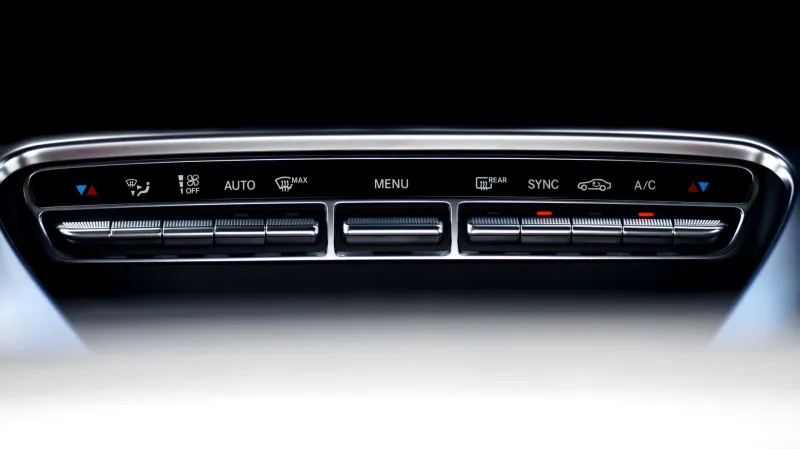
Beyond haptics, some automakers are experimenting with configurable physical control zones — dedicated rows of programmable buttons positioned within natural reach of the driver's hand, their functions displayed on a small adjacent screen rather than embedded in a sprawling central display. This hybrid architecture preserves the flexibility of digital customization while restoring the ergonomic advantage of tactile operation.
Genesis, the luxury arm of Hyundai, has drawn particular praise from automotive journalists and consumer advocates for its approach. The brand's recent interiors feature a deliberate balance of digital display space and physical controls, with critical vehicle functions accessible without navigating menu hierarchies. The result is an interior that feels modern without demanding the driver's sustained visual attention to operate it.
What Drivers Actually Want
Consumer research has become a more prominent input in interior design decisions than it was during the touchscreen gold rush. J.D. Power's annual Vehicle Dependability and Initial Quality studies have consistently flagged infotainment and interface complexity as leading sources of owner dissatisfaction. Complaints about difficult-to-use touchscreens have ranked among the most common across multiple model years, cutting across brand tiers from mainstream to luxury.
Younger buyers, often assumed to be the natural constituency for all-digital interfaces, have proven more pragmatic than that assumption suggested. Comfort with smartphones does not automatically translate into comfort with touchscreen-controlled climate systems while merging onto a freeway. The use case is simply different, and buyers across age groups have begun expressing preference for interfaces that reduce cognitive friction rather than maximize screen real estate.
That feedback is reaching product planning teams with increasing urgency. In a competitive market where conquest sales often hinge on the ownership experience rather than raw performance specifications, an interior that frustrates its occupants is a genuine commercial liability.
The Interface Future Is Hybrid
The trajectory of in-vehicle interface design is not heading back to the instrument clusters of 2005. Digital displays offer genuine advantages — navigation integration, over-the-air configurability, personalization profiles, and the ability to surface information contextually. Those capabilities are not going away, nor should they.
What is changing is the philosophy governing which functions belong to which input modality. The emerging consensus among human-machine interface engineers is that safety-critical and frequently used controls — climate, audio volume, driving mode selection — warrant physical or at minimum haptic-enabled access. Complex, non-time-sensitive functions — navigation destination entry, seat memory programming, connectivity settings — are appropriate candidates for touchscreen management.
This division of labor is less philosophically elegant than the all-or-nothing approaches that defined the last decade of interior design. It requires more disciplined engineering and more honest conversation about the actual demands of driving. But it reflects a more mature understanding of how people interact with their vehicles under real-world conditions.
The button, it turns out, was never the enemy of progress. It was simply waiting for the industry to remember what it was for.