Electrons Along the Interstate: How the Charging Economy Is Rebuilding America's Highway Towns
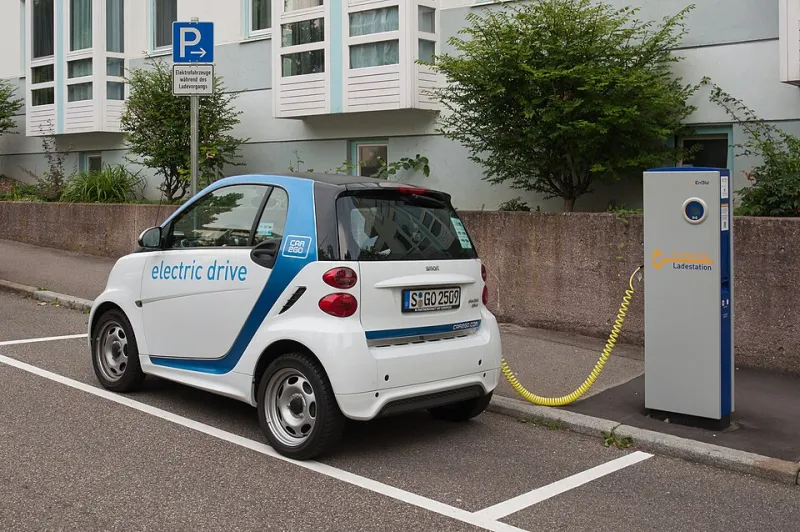
Photo: Julian Herzog (Website), CC BY 4.0, via Wikimedia Commons
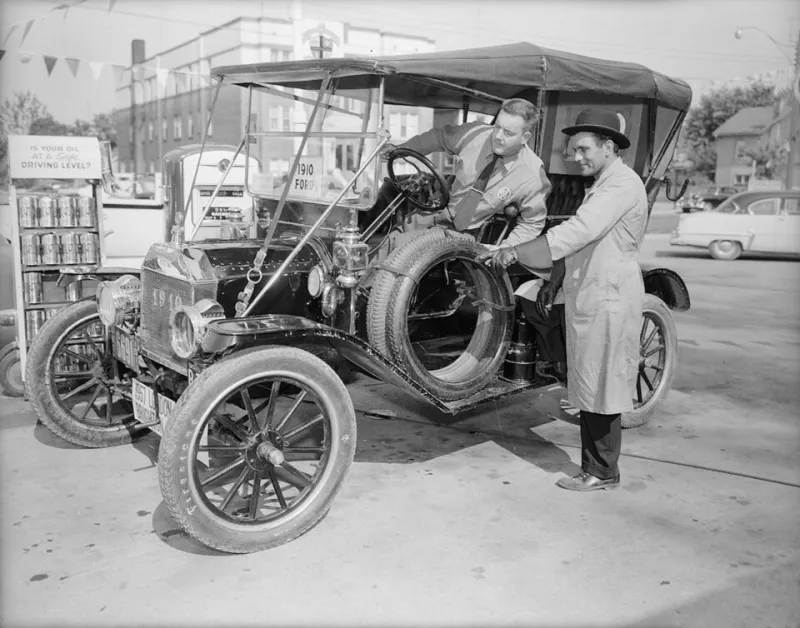
For most of the twentieth century, the American road trip ran on two fuels: gasoline and appetite. The family sedan pulled into a station on the edge of some prairie town, the kids ran inside for snacks, and the local diner counted on that forty-five-minute stop to make its week. The itinerary was dictated by the pump — and by the towns lucky enough to sit along the chosen interstate.
That geography is shifting. With electric vehicles now accounting for a growing share of new registrations in every region of the country, the logic of the long-distance stop has been rewritten around kilowatts rather than gallons. And the places that adapt fastest are discovering that the charging economy is less a threat to roadside America than a second chance for it.
The Twenty-Minute Town
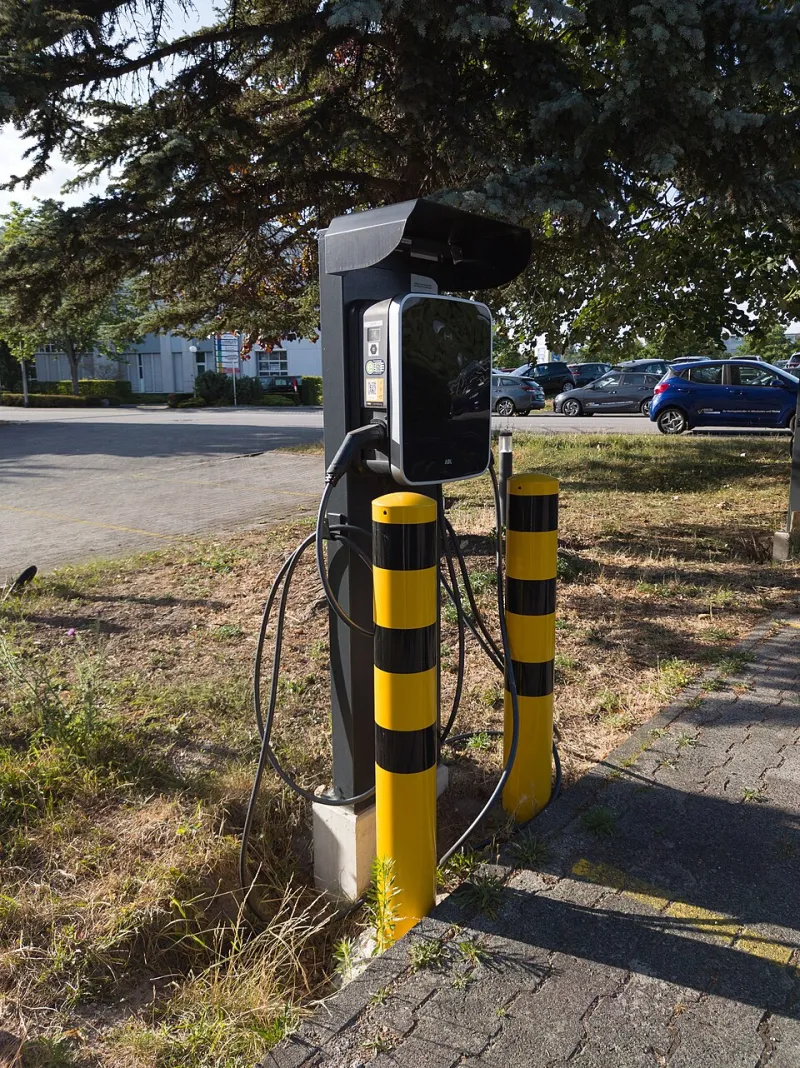
The economics of a DC fast-charging stop are strikingly different from those of a gas fill-up. A typical EV driver parks for twenty to forty minutes — long enough to eat a real meal, not just grab a bag of chips. Communities along I-80 in Nebraska, I-40 through Tennessee, and I-10 across Arizona have noticed what that dwell time is worth.
In towns like Vega, Texas, and Grinnell, Iowa, chambers of commerce have begun courting charging networks the way their grandparents once courted the interstate itself. A bank of eight fast chargers beside a local restaurant can redirect thousands of traveler dollars annually into a Main Street business that might otherwise see none of the interstate's traffic. Some municipalities have gone further, bundling charger permits with facade grants to make their downtowns — rather than a highway-exit big-box lot — the default stopping point.
The Corridors That Are Ready, and the Ones That Aren't
Coverage remains uneven, and the gaps tell their own story. The coastal corridors — the Boston-to-Washington megalopolis, California's coastal freeways, the I-5 spine through Oregon and Washington — are, for practical purposes, solved problems. Fast chargers appear every twenty to thirty miles, many offering 350-kilowatt speeds that replenish most batteries in under half an hour.
The Mountain West and the rural Plains are another matter. Distances between towns stretch further, grid capacity in remote counties can be thin, and utility upgrades move on timelines measured in years. Drivers crossing Wyoming or the Dakotas still plan with more caution than their gasoline-fueled counterparts — though the National Electric Vehicle Infrastructure program has begun closing those gaps, with new charging sites appearing along stretches of I-90 and I-25 that had none three years ago.
Route-planning software has become the indispensable companion for this new style of travel. Apps now weigh charger reliability, amenity quality, and real-time queue data alongside distance and elevation. Itineraries are increasingly built backward from a highly rated charging plaza rather than forward from a scenic landmark — a quiet inversion of how road trips were planned for generations.
Fast Food's Second Land Grab
The quick-service industry has been among the fastest to grasp the opportunity. Where a gas station stop lasted five minutes, a charging stop invites a sit-down transaction. Chains and regional eateries alike are clustering around high-traffic charging hubs, and some new travel centers are being designed from the ground up around charging canopies rather than fuel pumps.
The pattern echoes the original interstate land grab of the 1950s and 1960s, when fast-food empires seeded every exit ramp. The difference this time: the winners are being chosen by charger placement decisions made years in advance, and a location that misses the first wave of infrastructure investment may wait a long time for another.
What It Means for the Road Ahead
None of this arrives overnight. Grid interconnection queues, permitting delays, and equipment reliability remain genuine friction points, and drivers in the coldest states still contend with winter range penalties that shape winter itineraries. But the direction is unmistakable. The road trip — that most American of rituals — is not disappearing. It is being replumbed, rerouted, and, in a growing number of small towns, rediscovered as a lifeline.
The towns that once thrived because the interstate passed through them are learning a familiar lesson: on the American highway, prosperity has always followed the fuel.