The Pump's Long Goodbye: Rethinking America's Gas Stations for an Electric Century
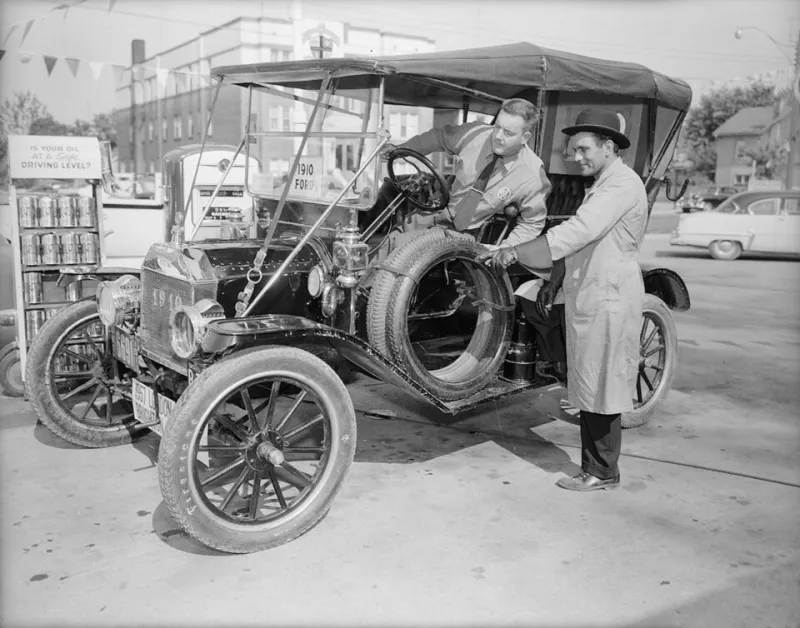
Photo: Toronto History from Toronto, Canada, CC BY 2.0, via Wikimedia Commons
Every American has a gas station memory. The one where a parent bought you a slushie on summer vacations. The one on the corner that was somehow always open at 2 a.m. These are among the most ubiquitous commercial buildings in the country — roughly 145,000 of them, more than the number of hospitals, movie theaters, and public libraries combined. And a meaningful share of them are facing a business question for which their industry has no settled answer: what do you do with a fuel station in a world that needs less fuel?
The Math Behind the Canopy
It helps to understand how gas stations actually make money. Margins on fuel are famously thin — a few cents per gallon after credit card fees. The real profit lives inside the store: coffee, lottery tickets, beer, and the impulse purchases that a captive audience of drivers provides. Fuel is the traffic generator; the convenience store is the business.
That model survives electrification longer than most people assume. Gasoline demand in the United States is projected to decline gradually rather than collapse, and the vehicle fleet turns over slowly. The average car on American roads is more than twelve years old, which means combustion vehicles — and their fuel needs — will remain a substantial market into the 2040s. The station on your corner is probably safe for the length of its mortgage.
The pressure is most acute at the margins: rural independents already operating on thin volumes, and urban stations where real estate values make the land worth more than the business.
Conversion Is Harder Than It Looks
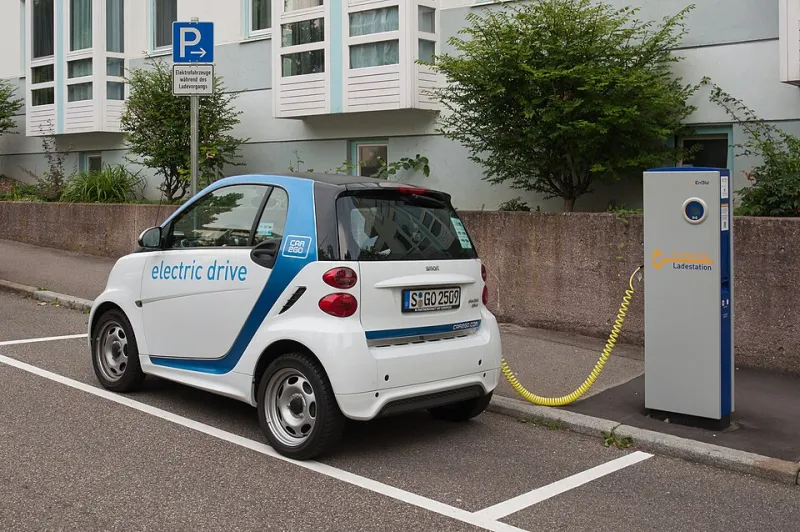
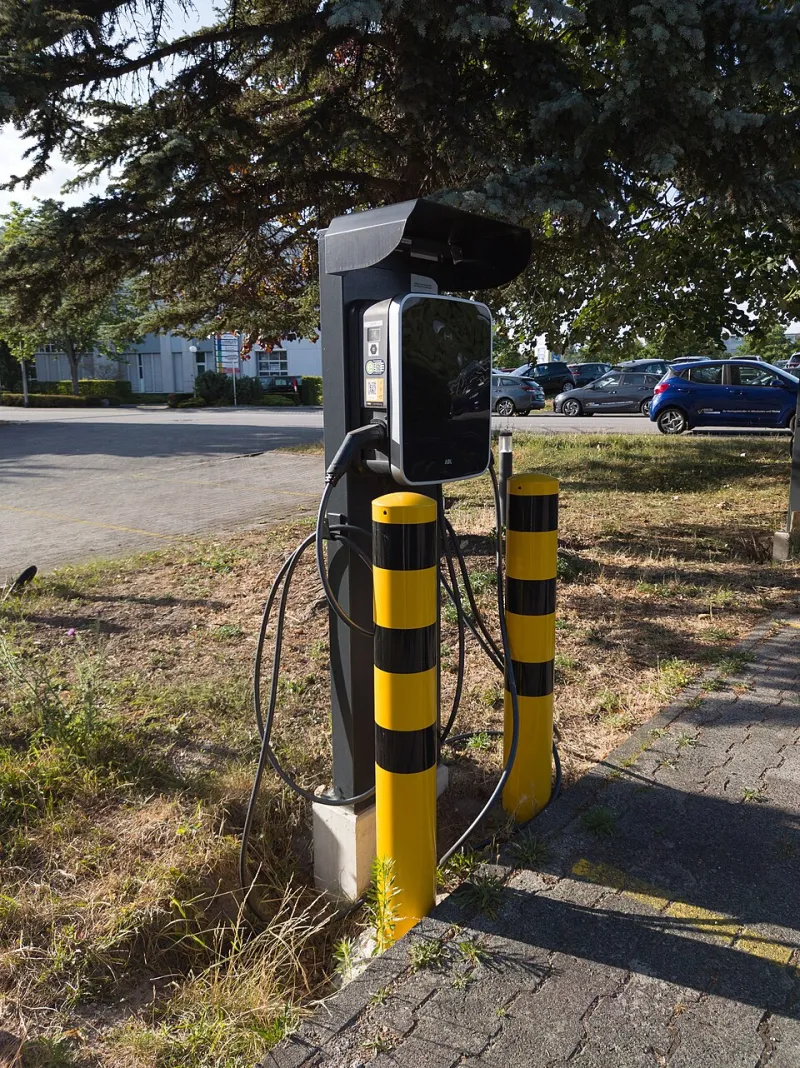
The obvious answer — turn gas stations into charging plazas — turns out to be surprisingly difficult. A DC fast-charging site with a dozen high-powered stalls can demand as much electrical capacity as a small shopping center, often requiring transformer upgrades and utility interconnection agreements that take years to secure. Gas station lots, typically a quarter acre with a canopy and underground tanks, are frequently too small or too grid-constrained for a full conversion.
There is also an economic mismatch. A charging session generates a fraction of the dwell time revenue of a fuel stop unless the site is designed as a destination — with food, seating, and restrooms worth a thirty-minute stay. The travel centers that are converting successfully are thinking less like gas stations and more like highway diners with chargers attached.
Three Futures for the Corner Station
The most likely outcome is not one future but three, running in parallel.
The first is adaptation. Established chains are already adding chargers to select locations, rebranding around convenience rather than fuel, and using their real estate expertise to pick high-value charging sites. The brands that win will be the ones that treat the charger as the new traffic generator and rebuild the store experience around longer visits.
The second is repurposing. A gas station is, fundamentally, a small parcel of paved land with road frontage and existing utility service — precisely the profile that suits EV charging depots for delivery fleets, micro-fulfillment nodes, car washes, or small-format retail. Cities from Los Angeles to Boston are already seeing shuttered stations redeveloped into exactly these uses. Expect zoning boards to become unexpected players in the transition.
The third is nostalgia. Some stations — particularly the architecturally distinctive ones, the 1930s cottage-style stations and the neon-signed roadside icons — will be preserved the way old drive-in theaters have been: as landmarks of a transportation era, valued precisely because they are obsolete.
A Transition Worth Designing
The risk in all of this is not the loss of fuel; it is the loss of what fuel stations quietly provide. They are rest stops, safety refuges on dark highways, and in many rural towns, one of the last remaining businesses. If the transition to electric motoring is managed carelessly, some communities will lose that function before charging infrastructure replaces it.
The gas station built the American roadside. What replaces it deserves the same intentionality — because the destination we stop at says as much about an era as the vehicle that carries us there.