Shift Happens: How the Manual Transmission Became the Most Unexpected Luxury Feature of the Modern Era
The conventional wisdom has been consistent for more than a decade: manual transmissions are dying. Automakers have systematically phased them out, dual-clutch and automatic systems have become faster and more fuel-efficient, and an entire generation of American drivers never learned the three-pedal dance in the first place. By most rational measures, the stick shift should be a footnote in automotive history by now.
And yet, something unexpected is happening on dealer lots and at press launches from Detroit to Stuttgart. A growing number of performance and premium manufacturers are not only retaining manual gearbox options — they are actively marketing them as defining features. Far from being an afterthought, the manual transmission is being repositioned as a luxury differentiator, a tactile antidote to the creeping automation that now defines the broader automotive experience.
The Numbers Tell a Complicated Story
Manual transmissions still represent a small fraction of overall US vehicle sales — hovering somewhere below 2 percent of the total market in recent years. That figure, taken in isolation, would seem to confirm the obituary. But aggregate data obscures a more nuanced picture.
In the performance and sports car segments, manual take rates tell a very different story. Porsche reports that a meaningful percentage of its 911 GT3 buyers — a vehicle that starts well above $200,000 — specifically select the Touring variant with its traditional six-speed manual over the company's acclaimed PDK dual-clutch automatic. BMW's M division continues to offer three-pedal configurations on several models, and demand consistently outpaces internal projections. Toyota's GR86 and Subaru's BRZ, two of the most enthusiast-focused vehicles in the mainstream market, see manual take rates that would have been considered exceptional even in the stick-shift's heyday.
The pattern suggests that the manual transmission is not dying uniformly — it is migrating. What was once a standard feature across the market is consolidating into a deliberate choice made by a specific, highly engaged, and often financially committed buyer.
Autonomy as the Unlikely Catalyst
To understand why manual transmissions are experiencing renewed cultural currency, it helps to understand the broader technological environment against which they are now defined. Advanced driver-assistance systems, semi-autonomous highway features, and the ongoing development of fully self-driving technology have collectively shifted the automotive experience toward passivity. Modern vehicles increasingly manage throttle, braking, steering inputs, and lane positioning on behalf of the driver.
For a growing cohort of enthusiasts, this trajectory represents not progress but erosion — a gradual transfer of agency from the human to the machine. The manual gearbox, in this context, functions as a direct counterargument. It demands attention. It requires the driver to anticipate road conditions, manage clutch engagement, and coordinate three limbs in a rhythmic, continuous dialogue with the vehicle. There is no automation layer to consult. The feedback is immediate and unmediated.
This is precisely the quality that manufacturers like Porsche and Mazda have begun to articulate explicitly in their marketing language. The manual transmission is no longer sold primarily on the grounds of mechanical efficiency or cost. It is sold as an experience — one that cannot be replicated by any algorithm, however sophisticated.
Nostalgia as a Market Force
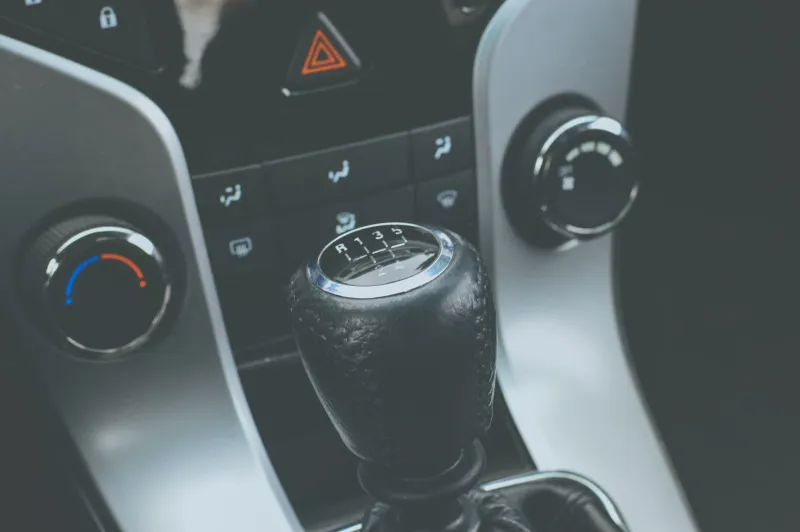
The cultural dimension of this resurgence should not be underestimated. American car culture has a long and deeply sentimental relationship with the manual gearbox. Learning to drive a stick shift carries a rite-of-passage quality in many households. The sound of a perfectly executed heel-and-toe downshift, the tactile resistance of a short-throw lever moving through a mechanical gate — these are sensory experiences that carry genuine emotional weight for a generation of drivers who grew up with them.
Automakers are acutely aware of this dynamic. The framing of the manual transmission as a heritage feature — something worth preserving precisely because it is disappearing — mirrors strategies employed successfully in other industries. Vinyl records, mechanical watches, and film photography have all demonstrated that analog technologies, when repositioned as premium experiences rather than outdated necessities, can command both loyalty and margin.
There is a commercial logic here that is easy to miss in aggregate sales data. A manufacturer does not need to sell manual transmissions in volume to benefit from offering them. The presence of a three-pedal option signals authenticity, communicates a commitment to driver engagement, and attracts exactly the kind of buyer whose enthusiasm generates disproportionate word-of-mouth influence within enthusiast communities.
Engineering in Reverse: The Cost of Keeping the Clutch
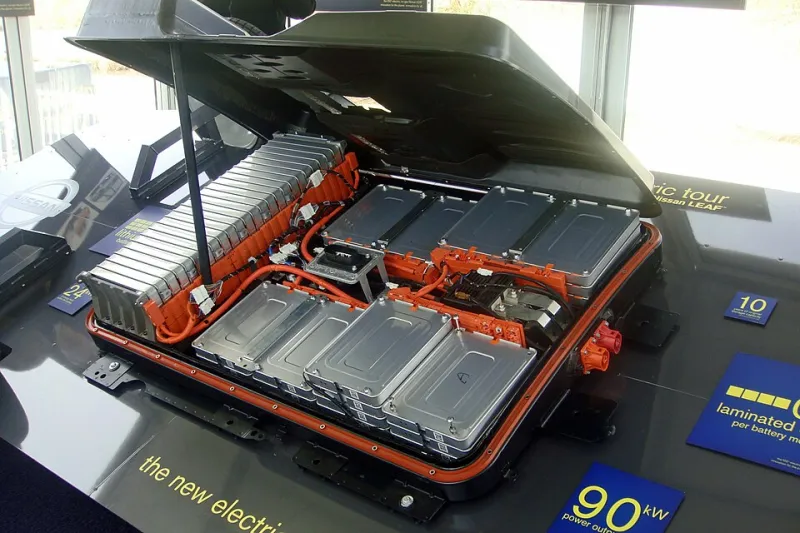
The decision to maintain a manual transmission program is not without significant cost. Modern powertrain development cycles are expensive, and engineering a gearbox to meet contemporary emissions standards, integrate with electronic stability systems, and satisfy durability requirements across diverse operating conditions demands substantial resources. As electrification accelerates, the calculus becomes even more complex — electric motors, by their nature, do not require multi-ratio gearboxes, and several manufacturers have experimented with simulated manual experiences in battery-electric vehicles with mixed critical reception.
Toyota's approach with the GR86, Porsche's continued investment in the 911's manual variant, and Honda's decision to offer a six-speed in the Civic Si and Type R all reflect a calculated judgment that the engineering cost is justified by the brand equity returned. These are not decisions made reluctantly. They are deliberate choices to serve a customer who has demonstrated both willingness to pay and long-term brand loyalty.
What the Manual Transmission Actually Represents
The deeper significance of the manual gearbox's persistence may lie less in its mechanical function than in what it represents as a cultural artifact. In a market moving steadily toward software-defined vehicles, over-the-air updates, and autonomous operation, the manual transmission stands as a tangible expression of a particular philosophy of driving — one in which the human remains the primary actor rather than a passenger awaiting destination arrival.
For manufacturers willing to serve that philosophy, the rewards extend beyond unit sales. They include the cultivation of a buyer who is deeply invested in the brand, highly vocal in enthusiast communities, and resistant to defection. In an industry increasingly defined by software ecosystems and subscription services, that kind of loyalty is genuinely rare.
The manual transmission was never simply a mechanism for changing gears. It was always, at some level, a relationship between driver and machine — one built on mutual demand and shared response. That relationship, it turns out, is not so easily automated away.
The stick shift's unlikely second act is, in the end, a story about what drivers are unwilling to surrender, and about the manufacturers shrewd enough to recognize that some features become more valuable precisely as they become more scarce.