One Drivetrain to Rule Them All? Why the Powertrain You Choose Today Will Shape Your Relationship With Driving for Years to Come

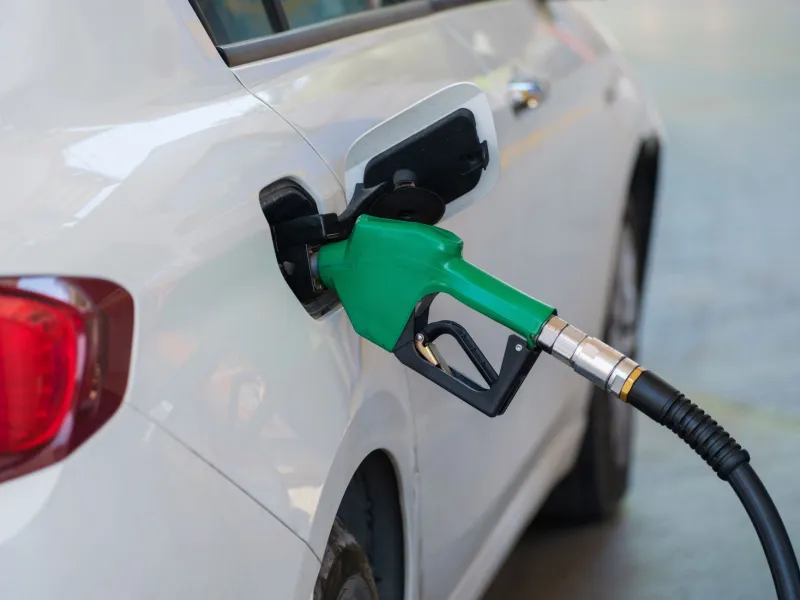
Photo by Photo by Stephan Louis on Unsplash on Unsplash
For most of the twentieth century, buying a car in America was, at its mechanical core, a relatively straightforward proposition. You chose an engine displacement, perhaps debated the merits of a V6 against a V8, and moved on to color swatches. The powertrain was largely a background variable. That era is over.
Today's showroom floor presents a genuinely complex decision tree. A single model line—take the Ford F-150 or the Hyundai Santa Fe as ready examples—may offer a naturally aspirated gasoline engine, a turbocharged variant, a full hybrid, a plug-in hybrid, and a fully electric version, each with meaningfully different ownership profiles. The choice a buyer makes today will echo through their garage for a decade or longer, shaping not just fuel receipts but the entire character of how that vehicle behaves, ages, and holds its value.
This is not a decision to delegate to a dealership sales script.
The Physics of Acceleration: Why Torque Delivery Is Everything
The most immediately perceptible difference between powertrain architectures is how they deliver power—specifically, the shape of their torque curves. An internal combustion engine, whether gasoline or diesel, builds torque across a rev range. There is a mechanical drama to it: the engine spins up, the transmission hunts for the right gear ratio, and thrust arrives in a familiar crescendo. For a segment of drivers, this orchestration is not a limitation—it is the point.
Battery-electric vehicles operate on fundamentally different physics. Electric motors produce maximum torque at zero RPM, meaning full thrust is available the instant a driver requests it. The 2024 Chevrolet Equinox EV and the Rivian R1T both demonstrate this characteristic in ways that can genuinely recalibrate a driver's spatial instincts on an on-ramp. The absence of gear changes and the linearity of power delivery create a sensation some describe as serene and others find sterile—a distinction that speaks more to personal driving philosophy than to objective performance metrics.
Plug-in hybrids occupy genuinely interesting middle ground. Systems like Toyota's fifth-generation hybrid architecture or Stellantis's eSport PHEV configurations blend electric immediacy at low speeds with combustion character at highway pace. For buyers who commute electrically five days a week but still want the sensory engagement of a gasoline engine on a weekend mountain road, this architecture is not a compromise—it is an intentional engineering answer to a specific lifestyle.
Maintenance Architecture: The Hidden Cost Differential
Beyond the driving experience, powertrain choice imposes a maintenance philosophy that compounds quietly over years of ownership.
A conventional internal combustion vehicle carries roughly 2,000 moving parts in its drivetrain alone. Oil changes, transmission fluid services, spark plug replacements, timing belt intervals, and coolant flushes are scheduled rituals that independent shops across every zip code in the country are fully equipped to perform. The infrastructure supporting ICE maintenance is mature, competitive, and deeply distributed.
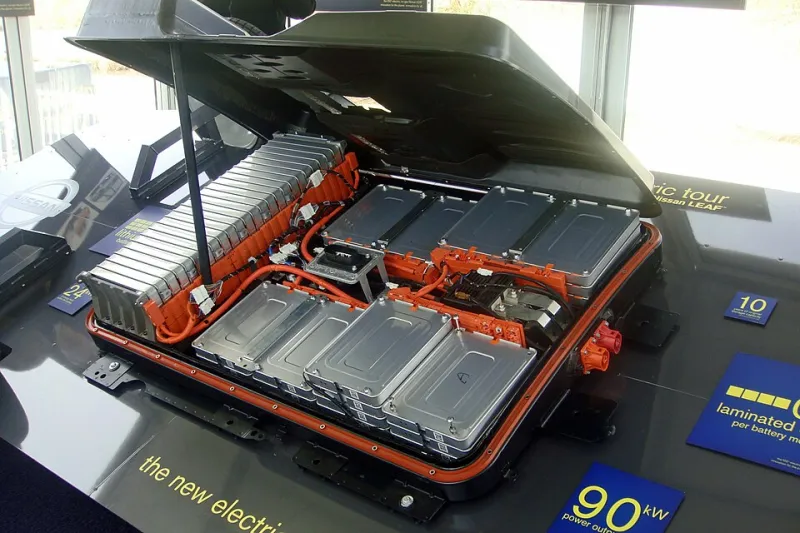
Battery-electric vehicles strip much of that complexity away. With fewer than 20 moving parts in a typical EV drivetrain, the maintenance calendar shrinks dramatically. Brake wear is reduced through regenerative deceleration. There is no exhaust system to corrode, no multi-speed automatic transmission to service in most configurations. The primary long-term variable becomes battery health—a consideration that demands attention to charging habits, thermal management practices, and, eventually, replacement economics that remain a genuine unknown for buyers purchasing today.
Plug-in hybrids carry the maintenance demands of both worlds to varying degrees. The combustion engine still requires conventional service intervals, while the battery pack and electric drive components add complexity that not every independent technician is yet equipped to address confidently. Owners of vehicles like the Jeep Wrangler 4xe or the BMW 330e have reported navigating a service landscape that can feel inconsistent outside of brand-authorized facilities.
Resale Value: The Market Is Still Writing the Rules
Long-term value retention is perhaps the most uncertain variable in the current powertrain equation, and honesty demands acknowledging that the data is still thin.
Traditional gasoline vehicles benefit from a resale market that is deep, liquid, and well-understood. Used-car buyers and auction houses have decades of depreciation data to reference. Financing and insurance products are calibrated around these patterns.
Electric vehicles have shown volatile resale behavior. Tesla's aggressive new-vehicle price adjustments in 2023 sent ripples through the used EV market that depreciated some models faster than comparable gasoline vehicles. Conversely, certain high-demand EV models have demonstrated resilience that surprised analysts. The trajectory is not yet settled, and buyers should approach EV residual value projections with measured skepticism rather than accepting manufacturer estimates at face value.
Plug-in hybrids have historically depreciated somewhat faster than conventional equivalents, partly due to battery replacement uncertainty and partly due to a used-car buyer pool that has been slower to embrace the complexity. That dynamic may shift as charging infrastructure matures and buyer familiarity increases, but it represents a present-day consideration worth factoring into total cost of ownership calculations.
Matching Architecture to Actual Driving Patterns
Perhaps the most important question a prospective buyer can ask is also the most overlooked: what does my actual driving life look like, not the idealized version?
A buyer who covers 15,000 miles annually on interstate highways, regularly tows a boat to a lake house in Wisconsin, and lives in a rural area without reliable public charging infrastructure may find that a full battery-electric vehicle creates genuine friction in their life regardless of its engineering merits. That same buyer in a Chicago suburb with a Level 2 home charger, a 40-mile daily commute, and occasional longer trips might find a plug-in hybrid delivers the best of both architectures precisely because it maps to their actual usage.
Conversely, a buyer in a dense urban environment—Los Angeles, Austin, or Atlanta—who drives predictable daily distances and has access to workplace charging may find the simplicity and running cost advantages of a battery-electric vehicle genuinely transformative. The technology does not need to be universal to be correct for a specific person.
The industry's marketing conversation tends to flatten these distinctions in favor of broad narrative arcs. Electrification advocates present battery EVs as universally superior; traditionalists romanticize combustion in ways that occasionally obscure legitimate performance and cost advantages of newer architectures. Neither posture serves the buyer particularly well.
The Decision That Compounds
What makes the current moment genuinely consequential is the duration of its implications. Americans hold onto vehicles for an average of over eight years, according to S&P Global Mobility data. A powertrain decision made in a showroom today will govern a driver's experience well into the early 2030s—a period during which charging infrastructure, battery technology, fuel prices, and regulatory environments will all continue evolving in directions that remain partially speculative.
The most defensible approach is not to chase the technology that generates the most enthusiasm in the automotive press, but to rigorously audit personal driving patterns, honestly assess home charging feasibility, and evaluate total ownership cost across the full expected tenure of the vehicle. The powertrain that wins on a spec sheet may not be the one that wins in your driveway.
The great powertrain divide is real, and it is widening. Navigating it well requires the same thing good driving always has: clear eyes, honest self-assessment, and a willingness to ignore the noise.